OIL SPILL RESPONSE PLANNING, TRAINING & EXERCISES

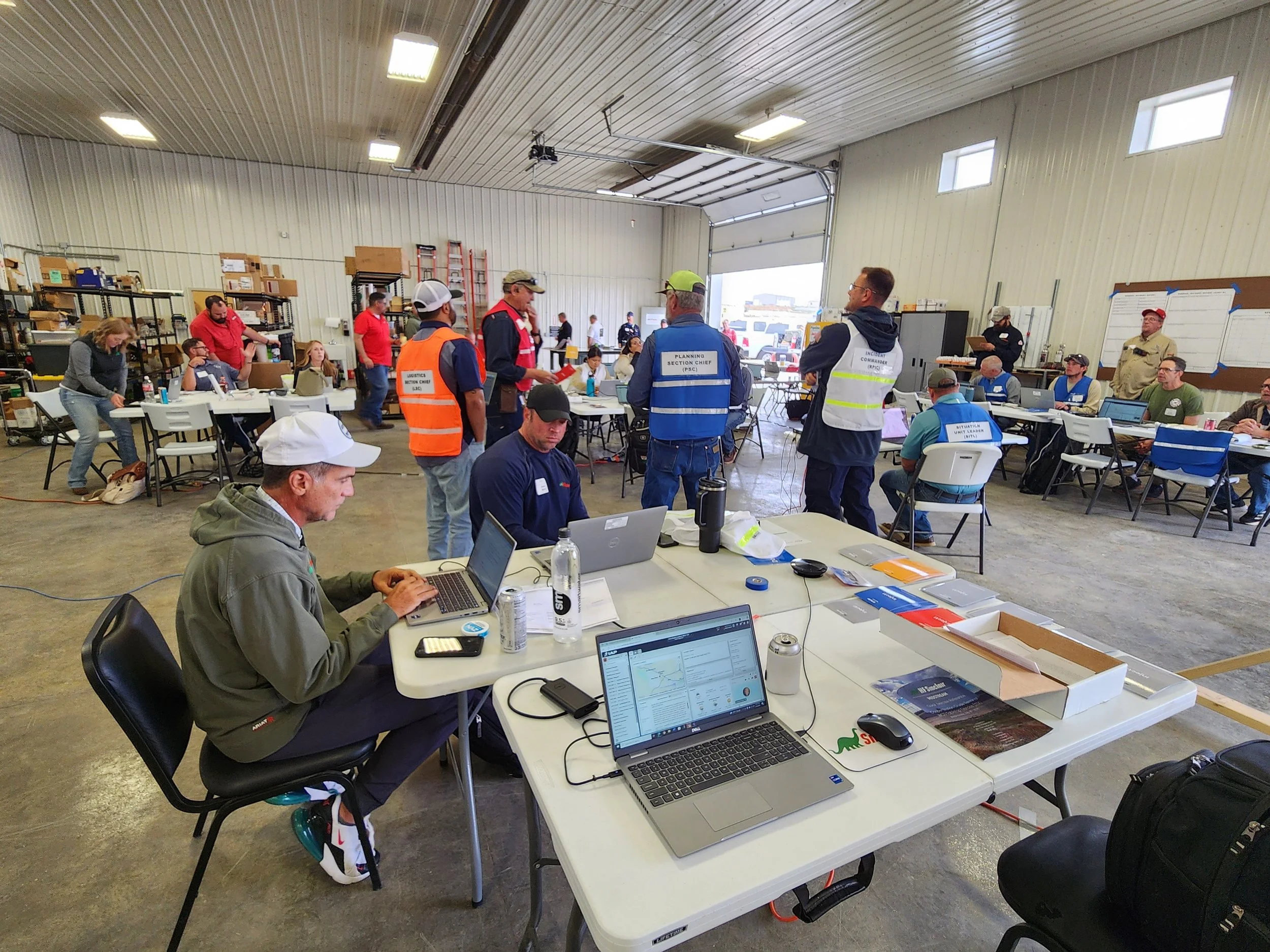
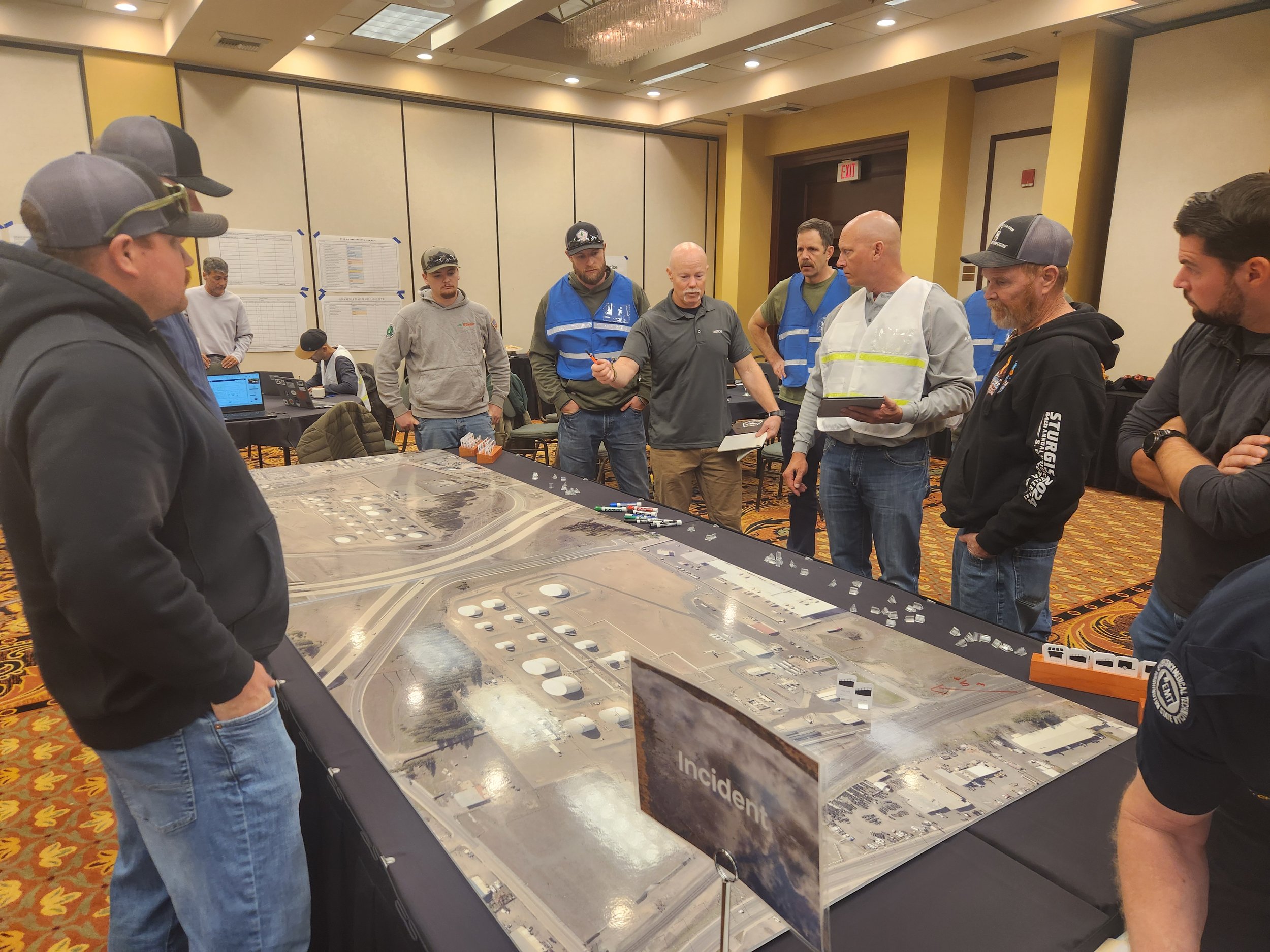
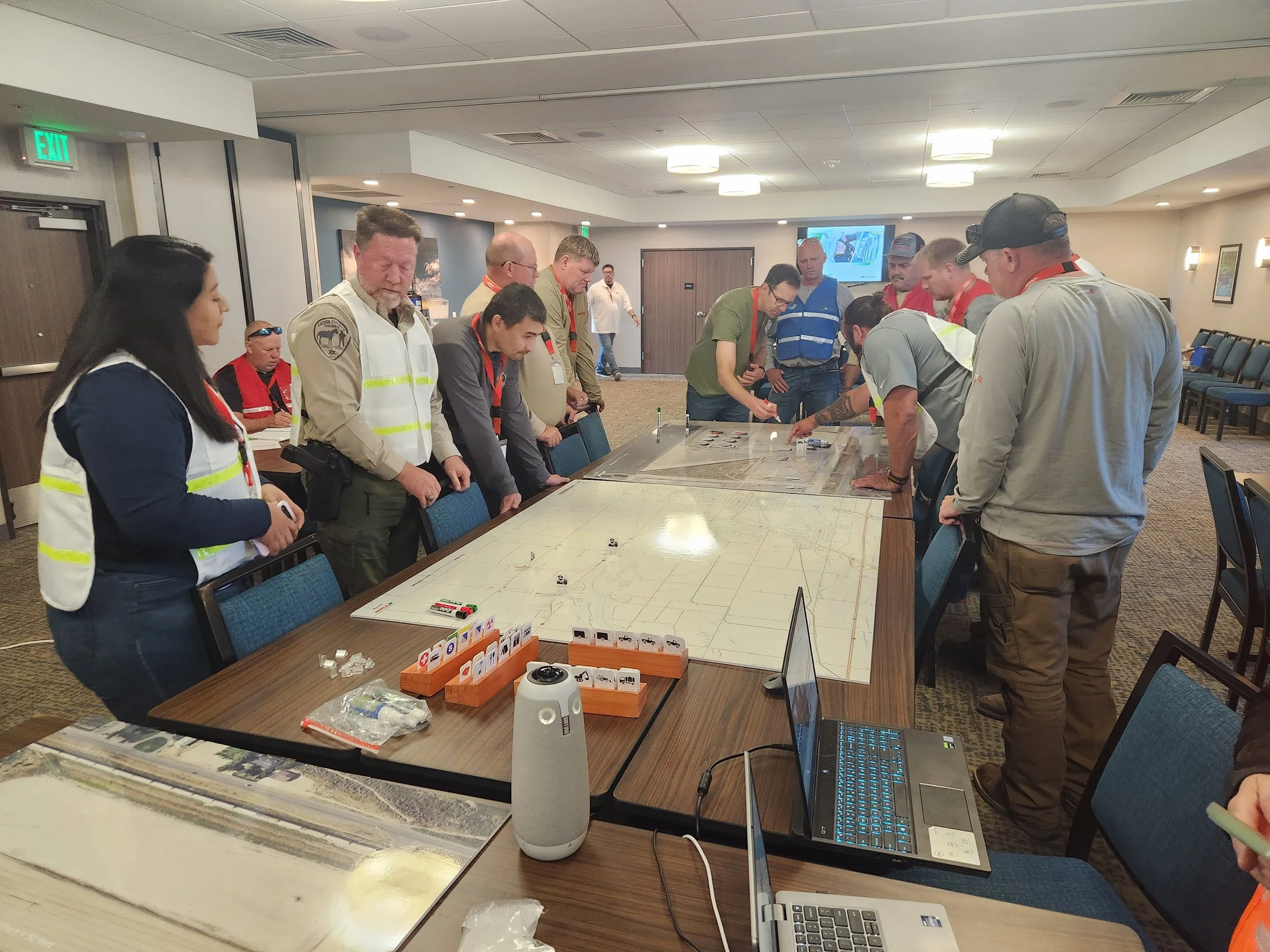
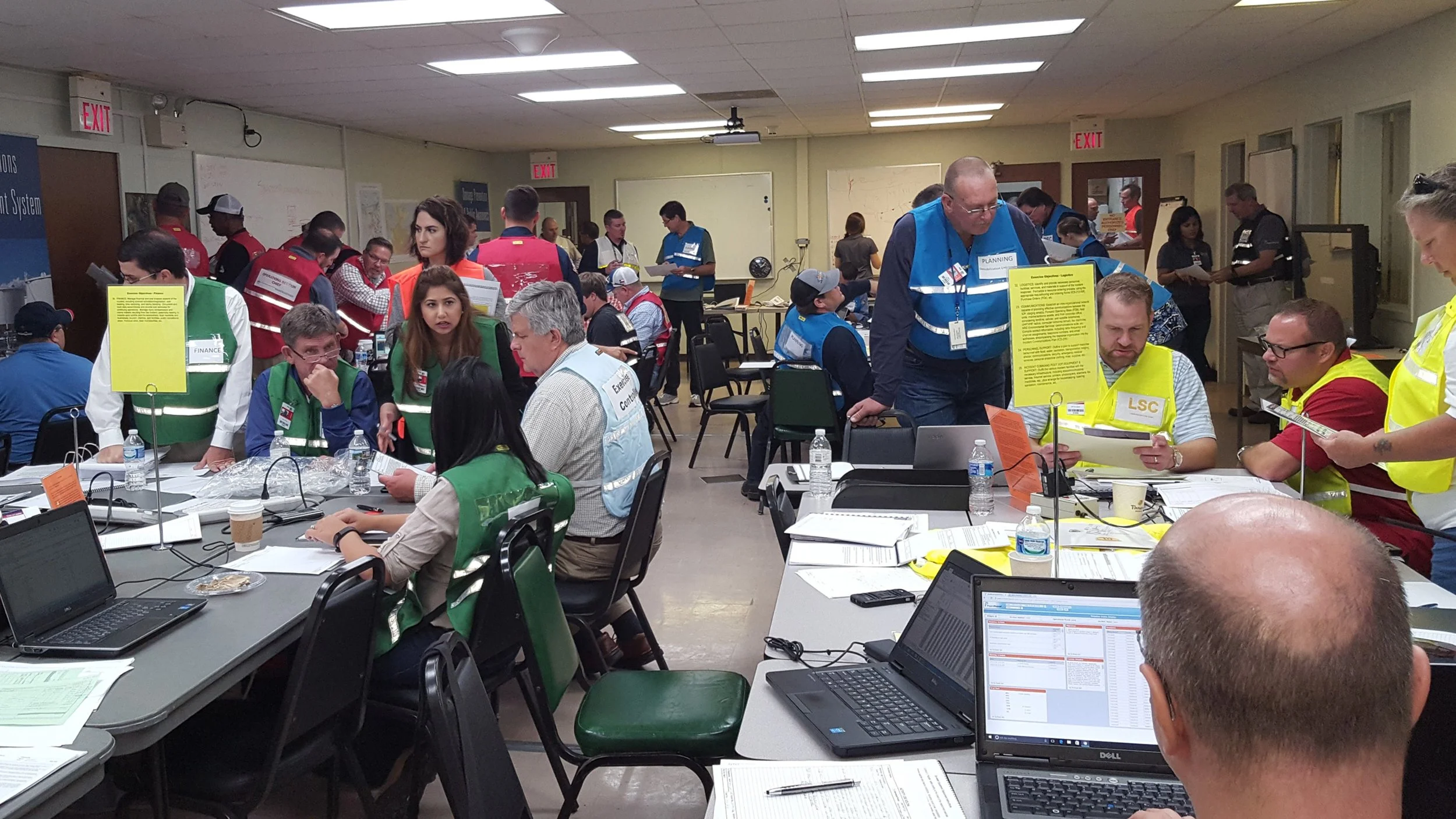
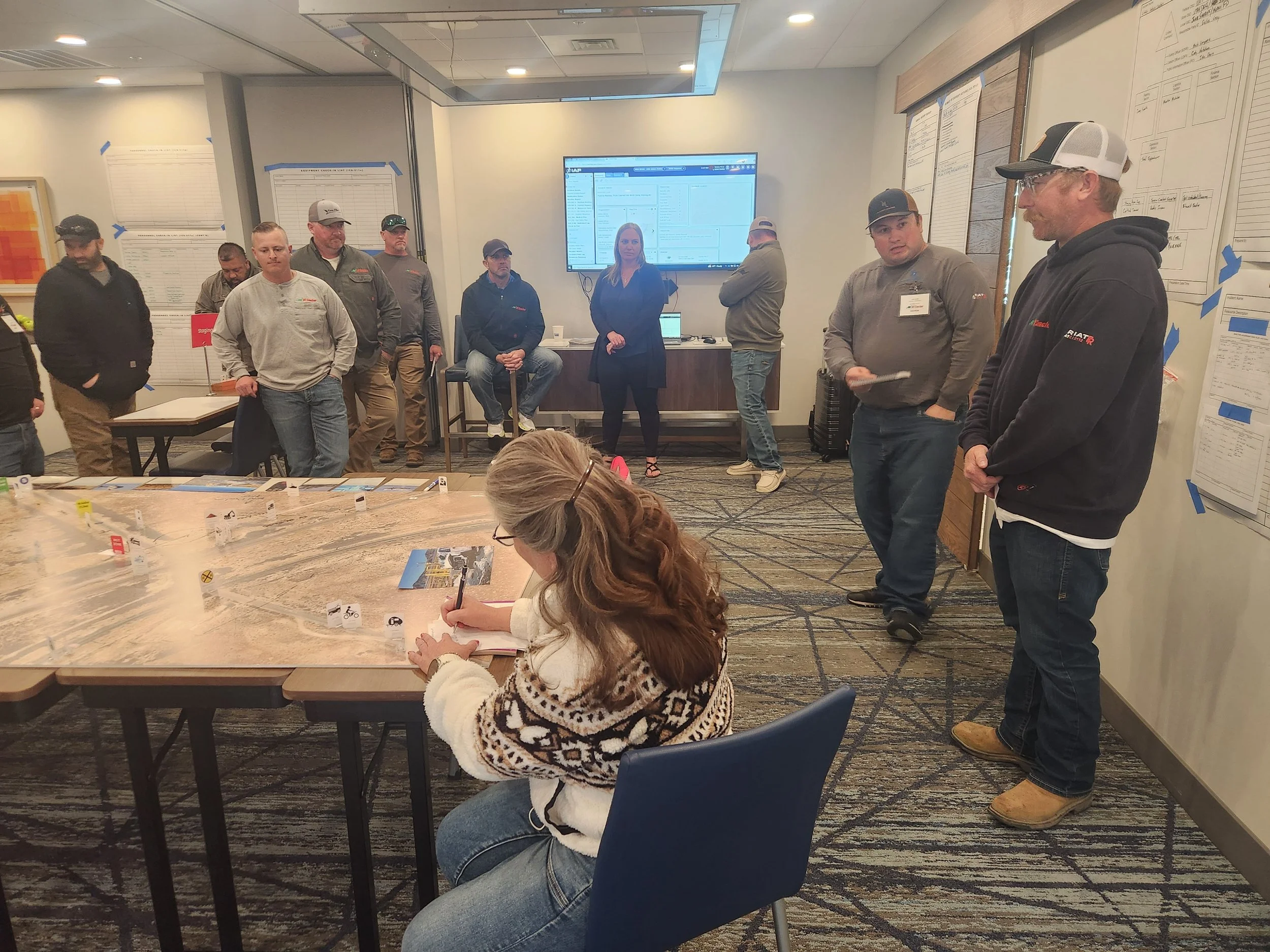
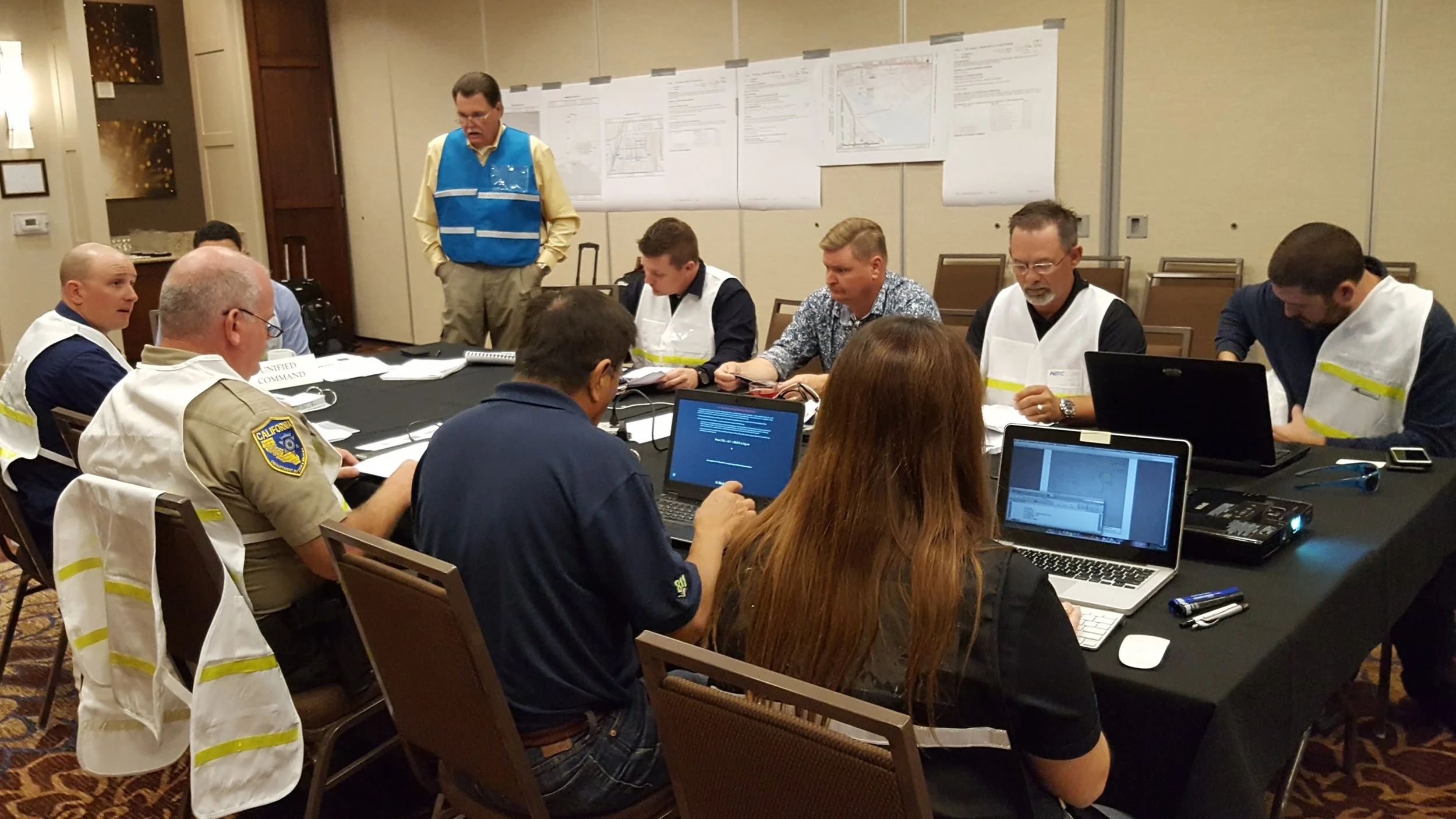
Contingencies has a wealth of experience in exercise design and facilitation. Formats range from relatively small, discussion-based exercises to large-scale, operations-based drills involving hundreds of participants.
Exercise Design
Consistent with Homeland Security Exercise & Evaluation Program (HSEEP) principles.
Stakeholder Outreach
Joint exercise planning with federal/state/local agencies, first responders, OSROs, NGOs, and industry partners.
Expert Facilitation
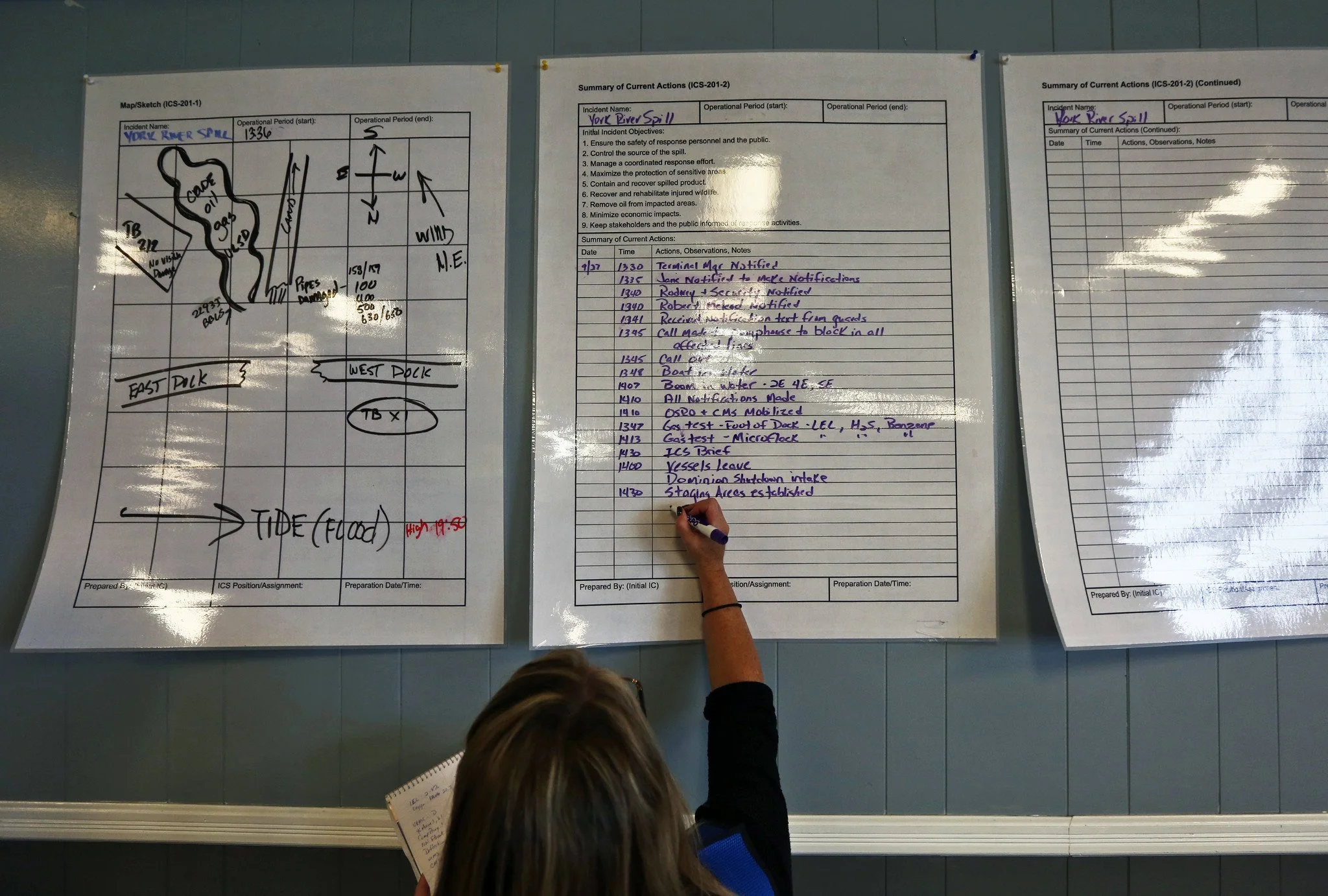
Addressing major aspects of an oil spill response, in concert with the Operational Period Planning Cycle (Planning “P”).
Practical Coaching
Sharing our vast experiences with ICS and oil spill best practices.
Constructive Evaluation
Including After Action Report (AAR) preparation.
Realistic Scenarios
Grab the popcorn! Imaginative, yet realistic, our scenarios read like a Hollywood movie script, engaging participants right from the start.
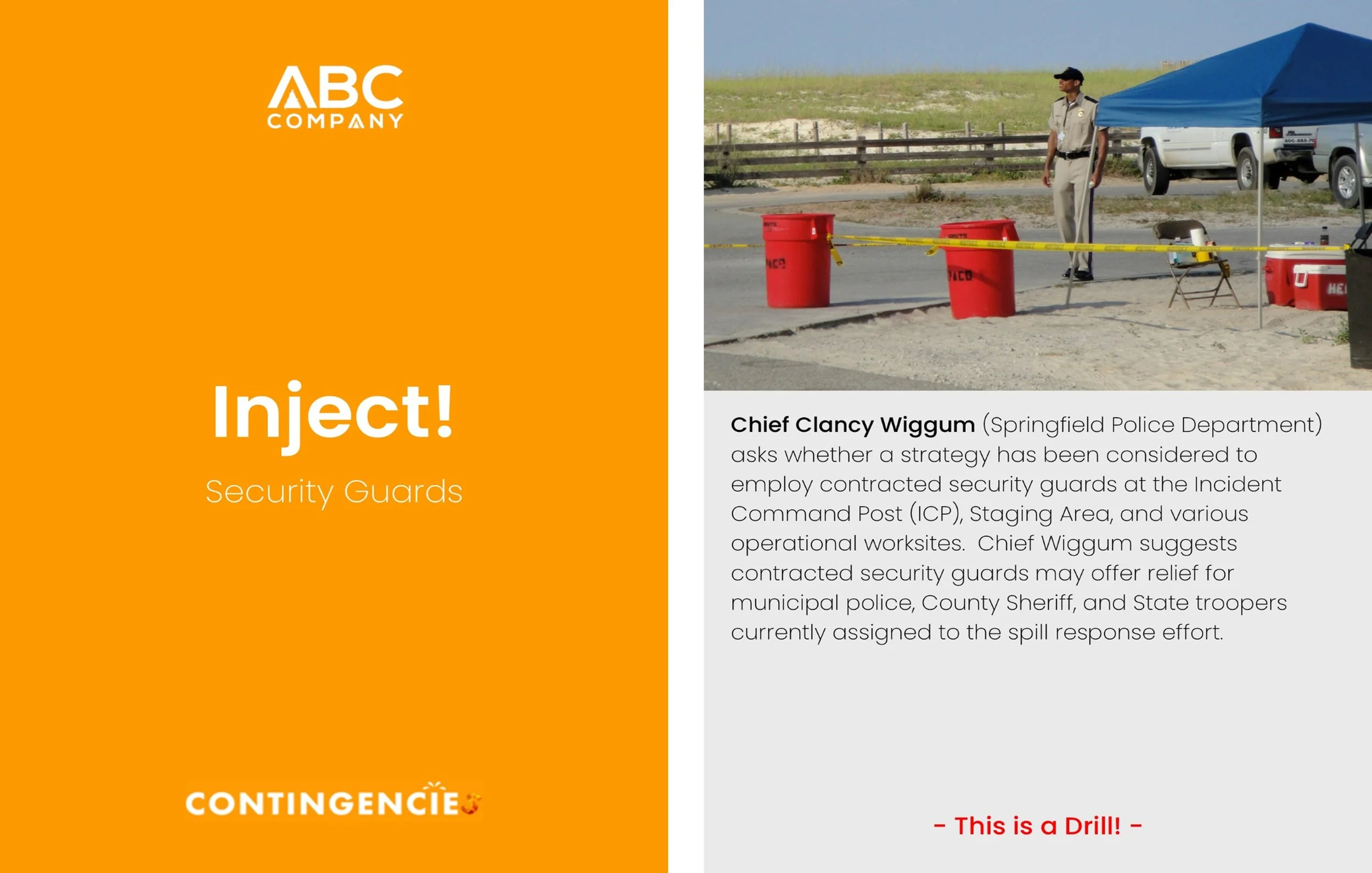
Challenging Injects
Unique to your operations and environmental footprint (not database-generated), incorporating topics relating to safety, public information, stakeholder relations, operations, wildlife/environment, logistics, finance, claims, etc. Injects are formatted as playing cards, adding to the overall “gaming” experience. Video injects are also incorporated into exercise play to reflect observations made by field personnel and simulate interactions with the news media, elected officials, and various stakeholders.
Game Boards
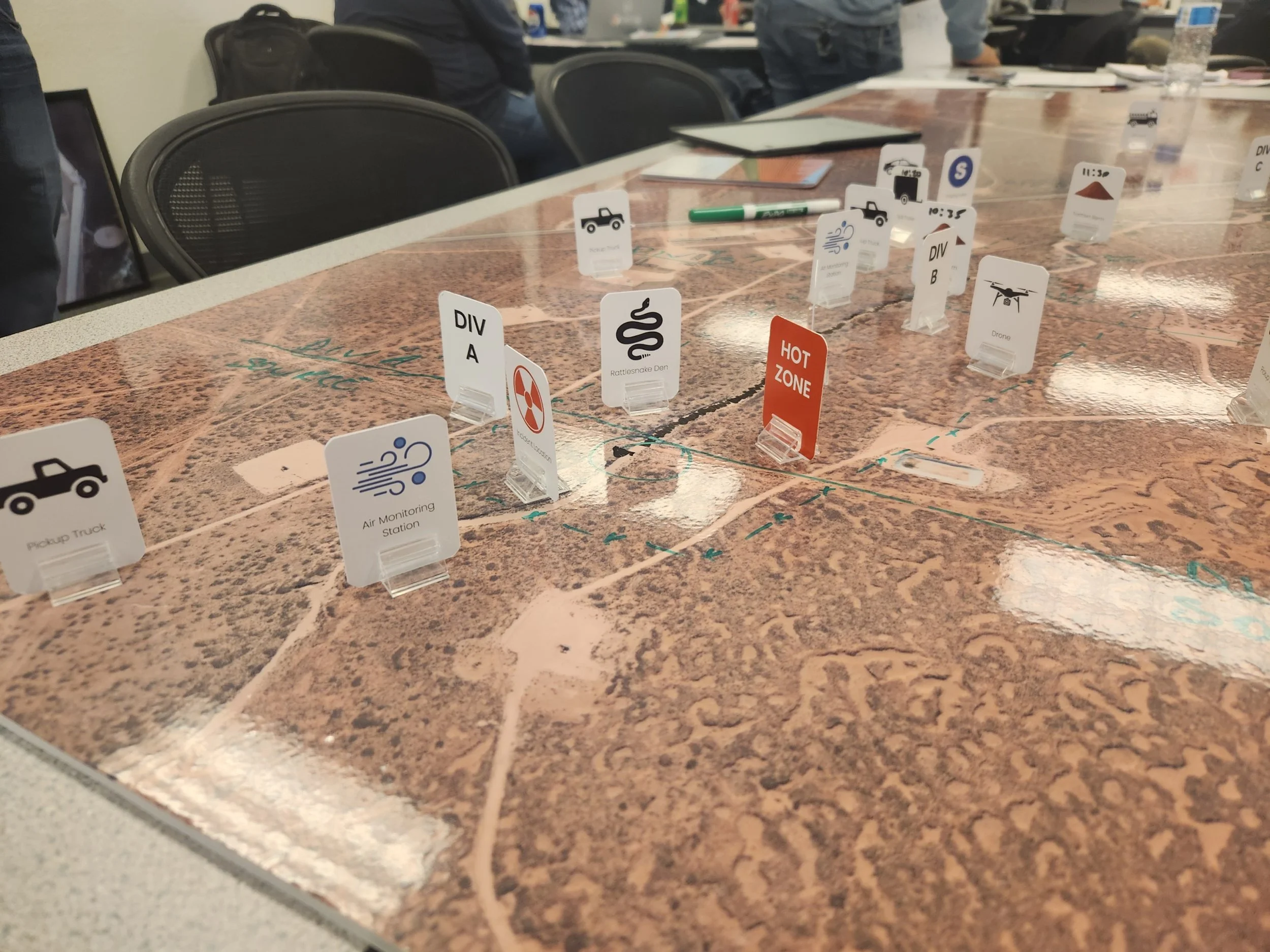
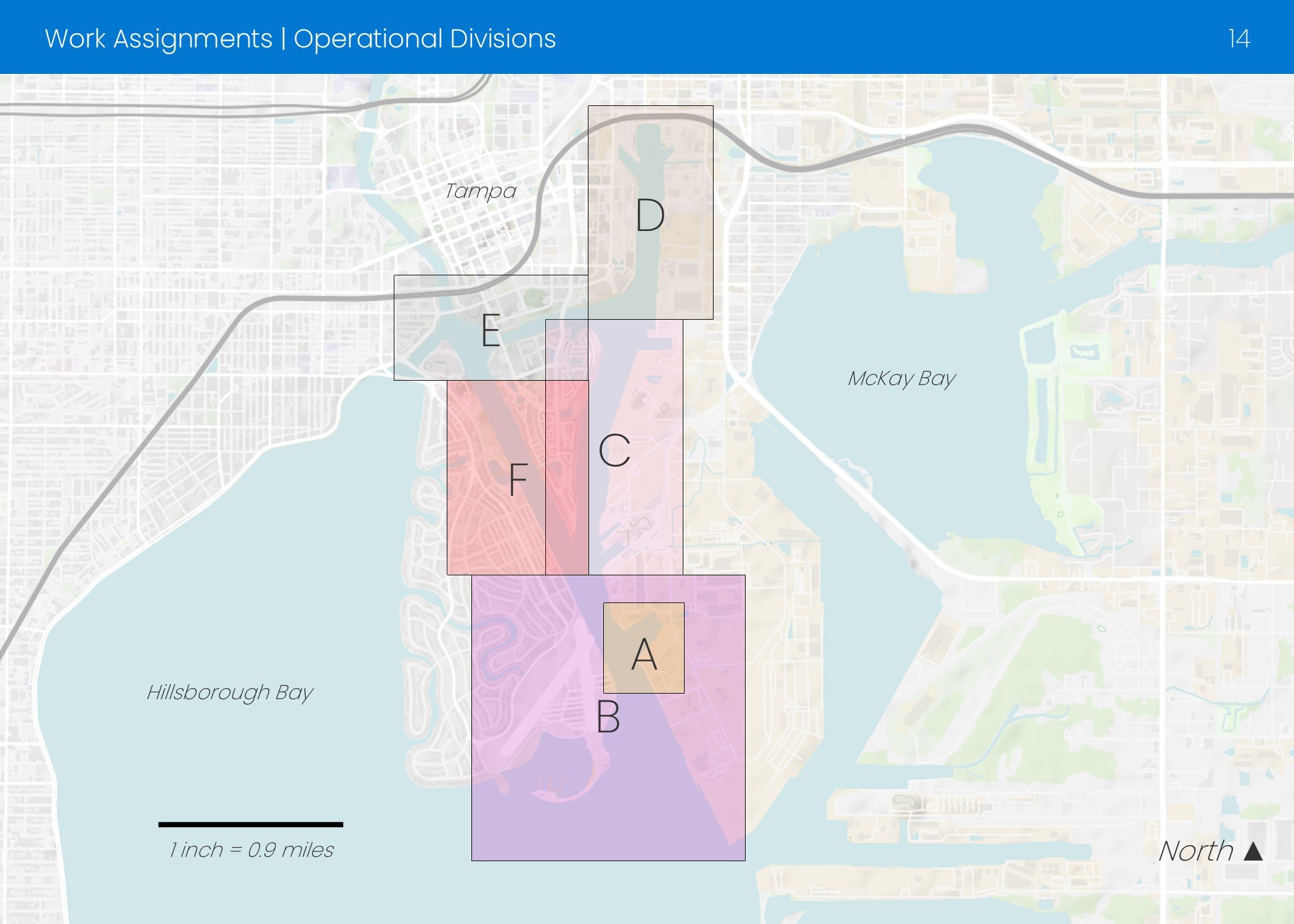
Our brilliant lay-flat map allows team members to plot spill trajectories, formulate strategies/tactics, visualize deployed resources, outline Division boundaries, illustrate hot/warm/cold zones, portray locations of incident facilities, identify sensitive areas, depict wildlife impacts, etc. Customized map pawns (miniature game pieces) add a bit of fun, while also contributing to player engagement.
Artificial Intelligence
Yes, we’ve hopped on the bandwagon, but we strictly use AI to generate near life-like video, photographs, and other imagery to complement the scenario. Everything else is hand-crafted, not computer-generated.
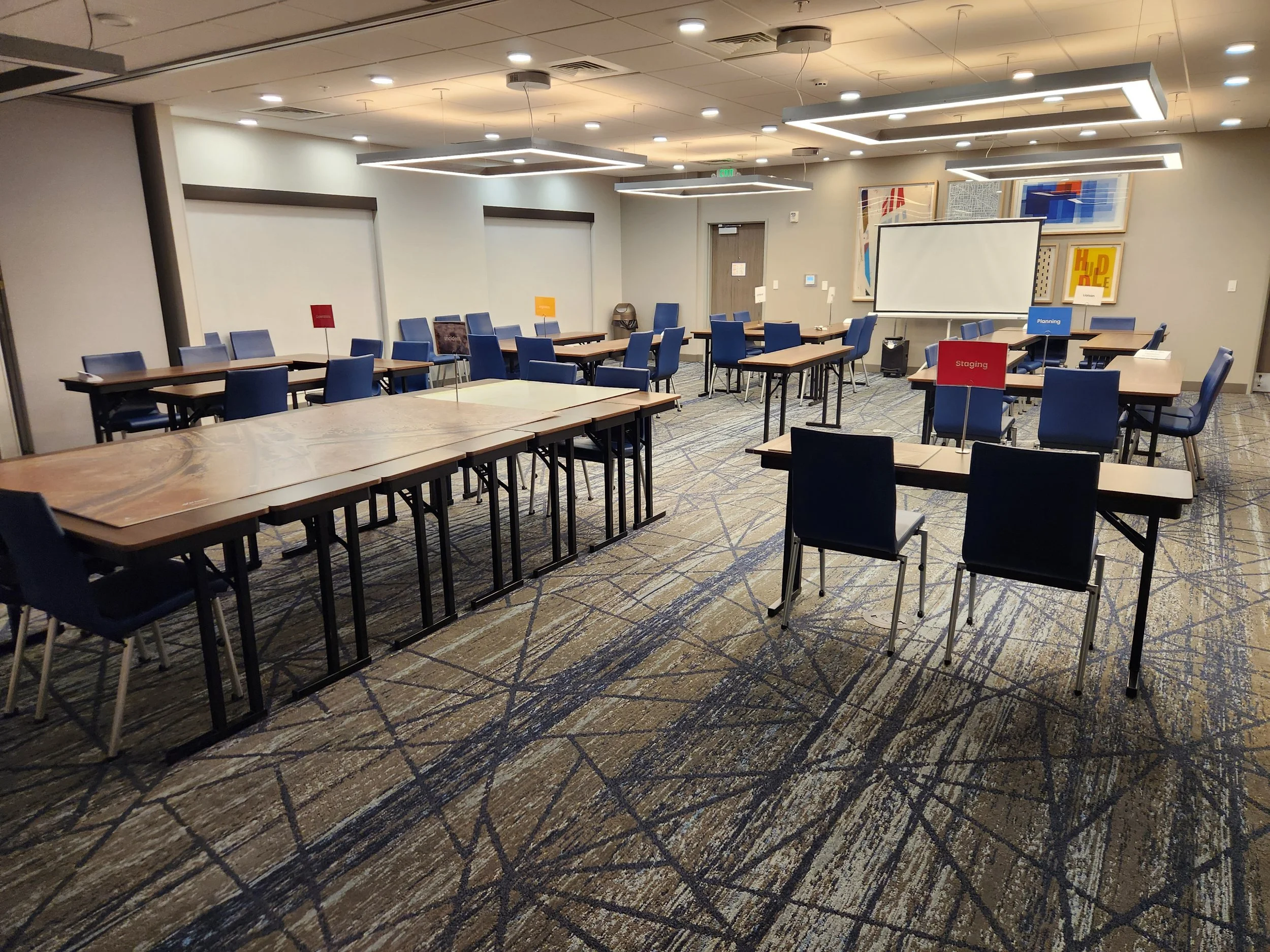
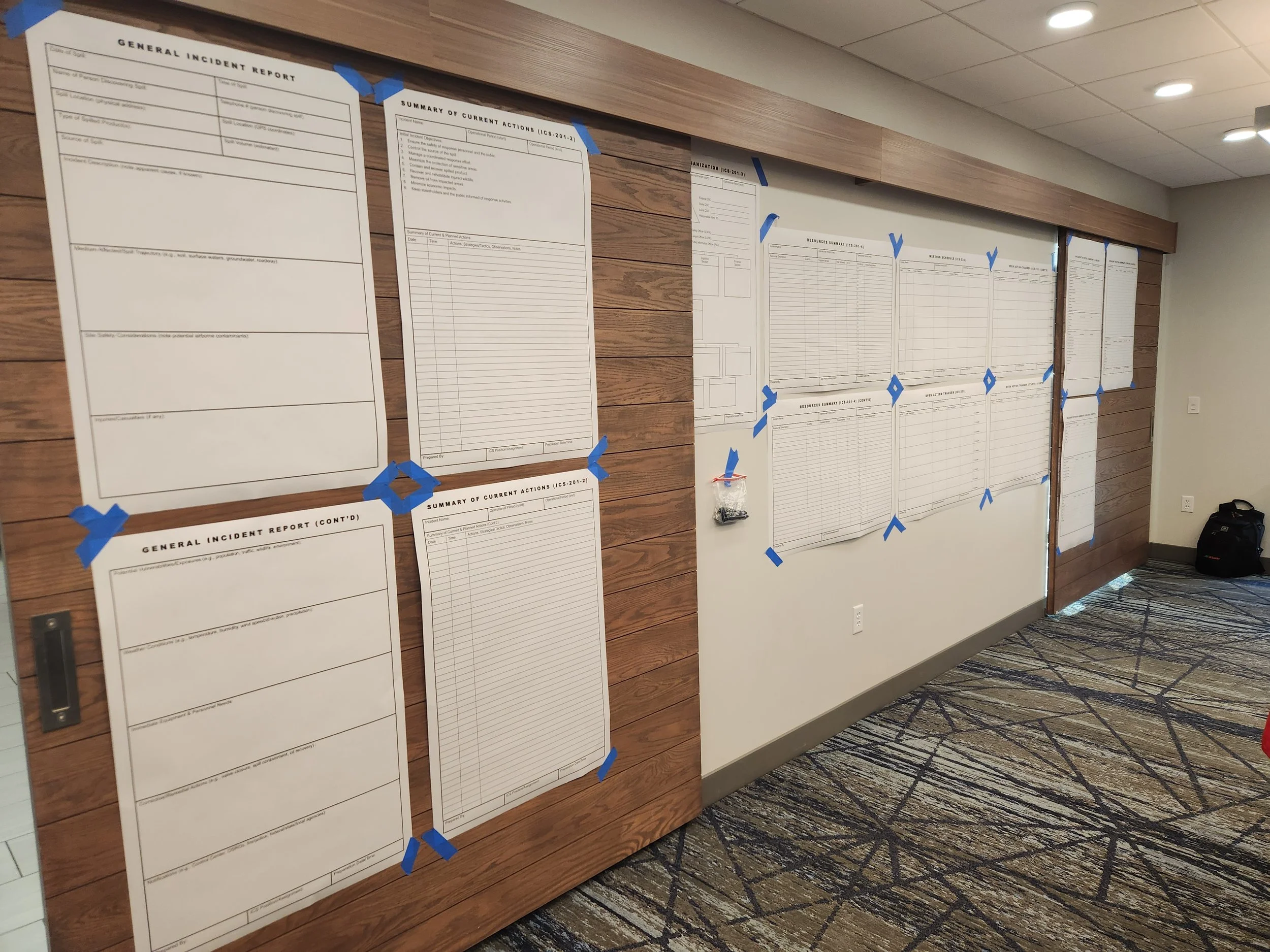
Play Space Setup
ICS form kits, status boards, ICS position-specific vests, functional display signs, etc.
Exercise Playbooks
Professionally crafted in an easy-to-read format, featuring quick-reference checklists, ICS forms, Planning “P” meeting agendas, maps/diagrams, ACP/GRP excerpts, and more. It’s a valuable keepsake for reference in future emergencies!
Exercise Website
Used to communicate exercise specifics (including the objectives, ground rules, sequence of events, deliverables, and other logistical-type matters), capture action items, and register attendees.
Budget-conscious
Cost-effective programs, catered to your budget, starting at $6,000.
Our equipment deployment exercises are led by industry professionals with years of experience in oil spill response. Sessions may be conducted independently or as an operational component of a concurrent tabletop/functional exercise.
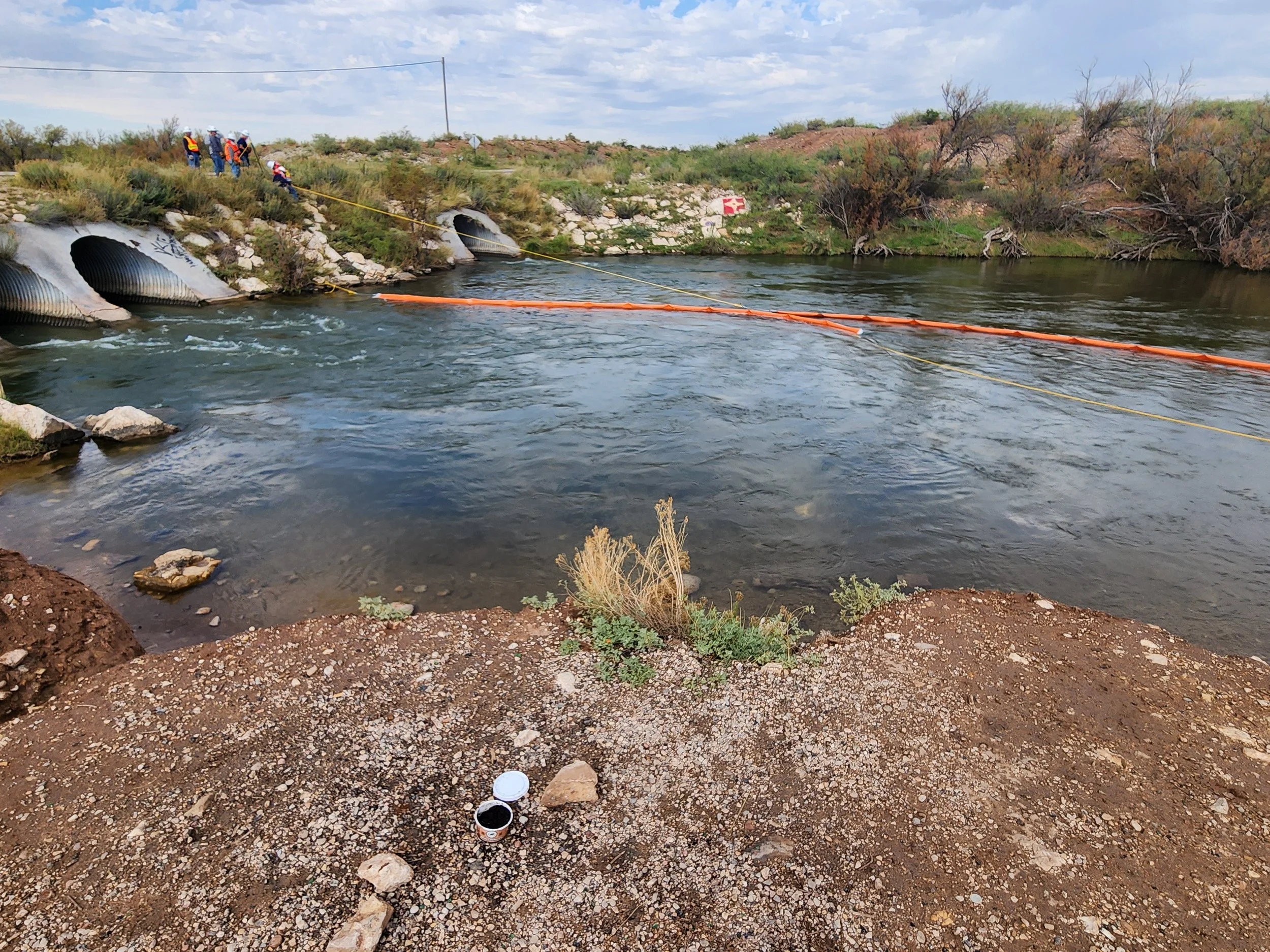
Boom Deployment
Practice techniques in your own “backyard”, at strategic locations identified in your OPA ’90 Spill Response Plan and governing ACP/GRP.
Boom Configurations
• Containment.
• Diversion.
• Deflection.
• Exclusion.
Hands-on Instruction
• Mooring line assembly.
• Towing and anchoring.
• Decontamination.
• Proper storage.
• Inventory rotation.
• (Most importantly) safety.
Boom Failure Analysis
• Entrainment.
• Splashover.
• Submergence.
• Planing.
• Drainage.
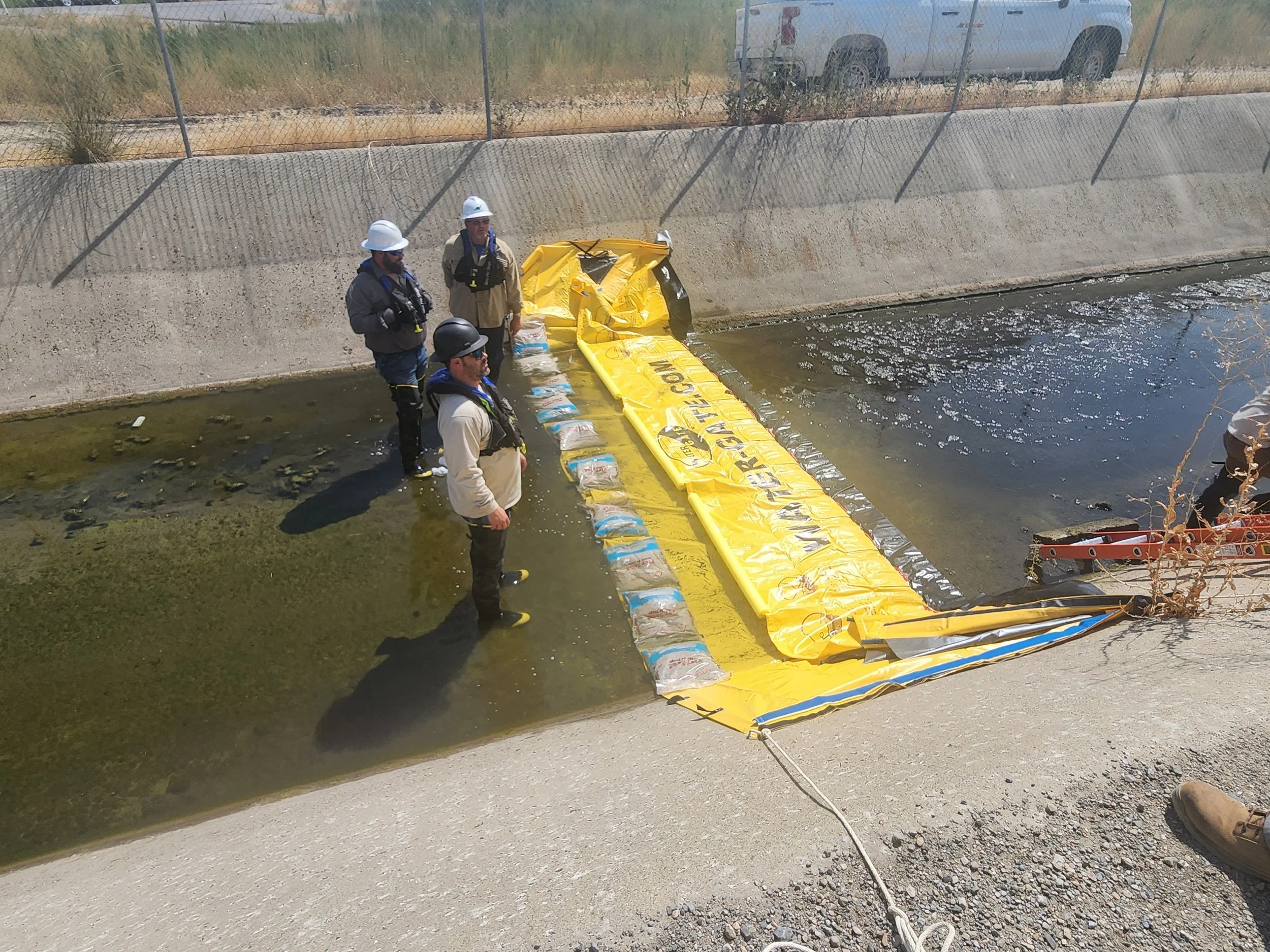
Beyond Booming
• Underflow dam construction.
• Sorbent filter fence installation.
• Portable skimmer operation.
• Sorbent application.
• Temporary storage of oily liquids.
• Quick shoreline assessment.
• Staging area management.
As opposed to a multi-hazard approach, our classroom-style incident management training focuses on ICS principles as they specifically apply to oil spill response.
Visual Aids
Photographs, illustrations, example ICS forms, and case histories form the “backbone” of our training presentations.
Customized Handbooks
Serve not only as a training supplement, but also as a valuable post-training reference.
Familiar ICS Concepts
• Common terminology.
• Position titles.
• Modular organization.
• Chain-of-command.
• Manageable span-of-control.
• Integrated communications.
• Management by objectives.
• Incident facilities.
• Unified Command.
• Resource management.
Planning “P”
• ICS forms preparation.
• Meetings and briefings.
• Incident action planning.
Beyond ICS
• Oil spill containment/recovery.
• Sensitive area protection.
• Waste management.
• Shoreline cleanup.
• Equipment decontamination.
• Vessel decontamination.
• Submerged oil recovery.
• Wildlife rescue and rehabilitation.
Local Flavor
Programs delve into relevant subject matter from your OPA ’90 Spill Response Plan and Area Contingency Plan (ACP), while also exploring local political and news media influences, public and environmental exposures, and site-specific operational and logistical challenges
ICS Position-Specific Training
We also offer in-depth courses, focused on your specific role in the Command & General Staff.
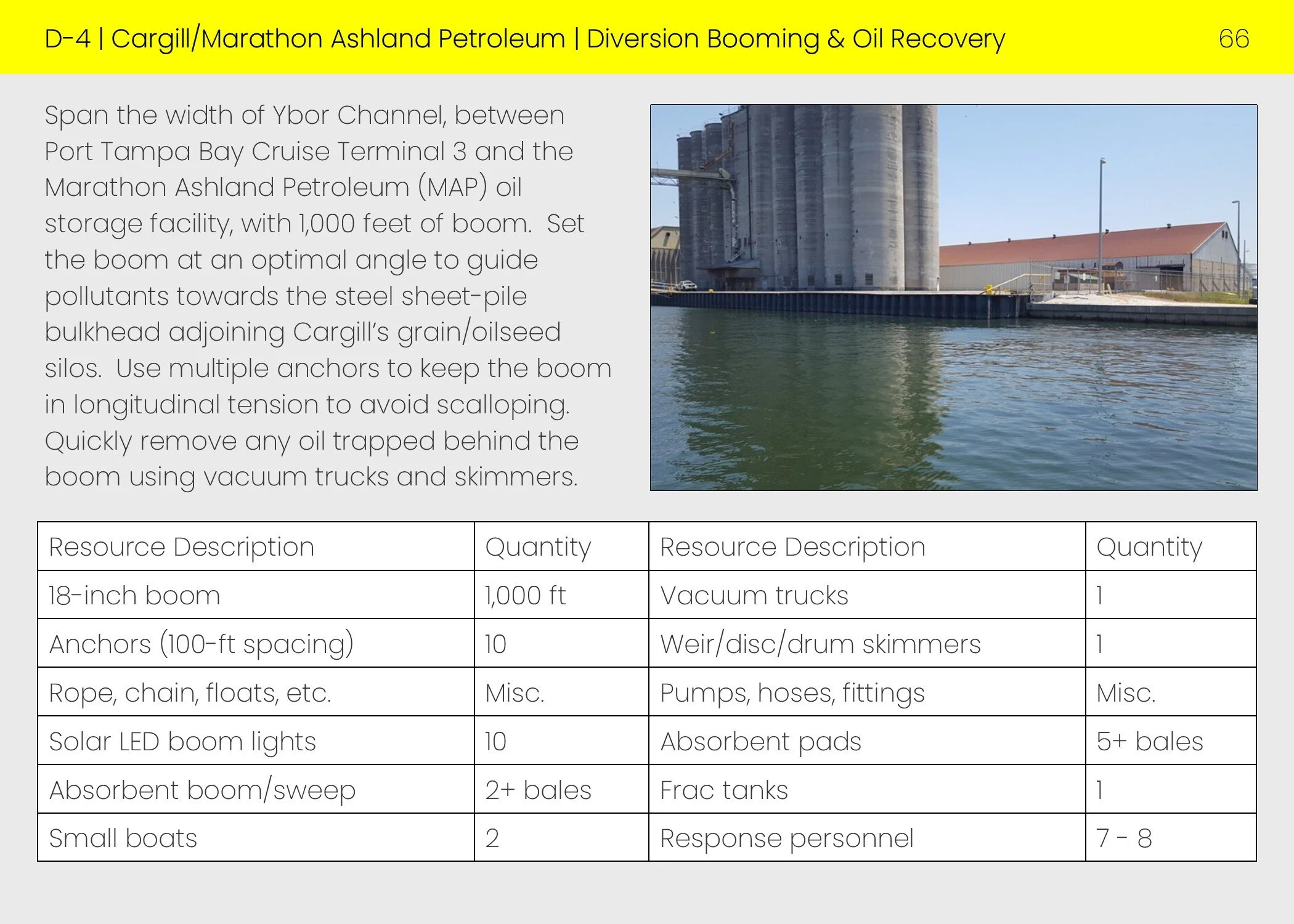
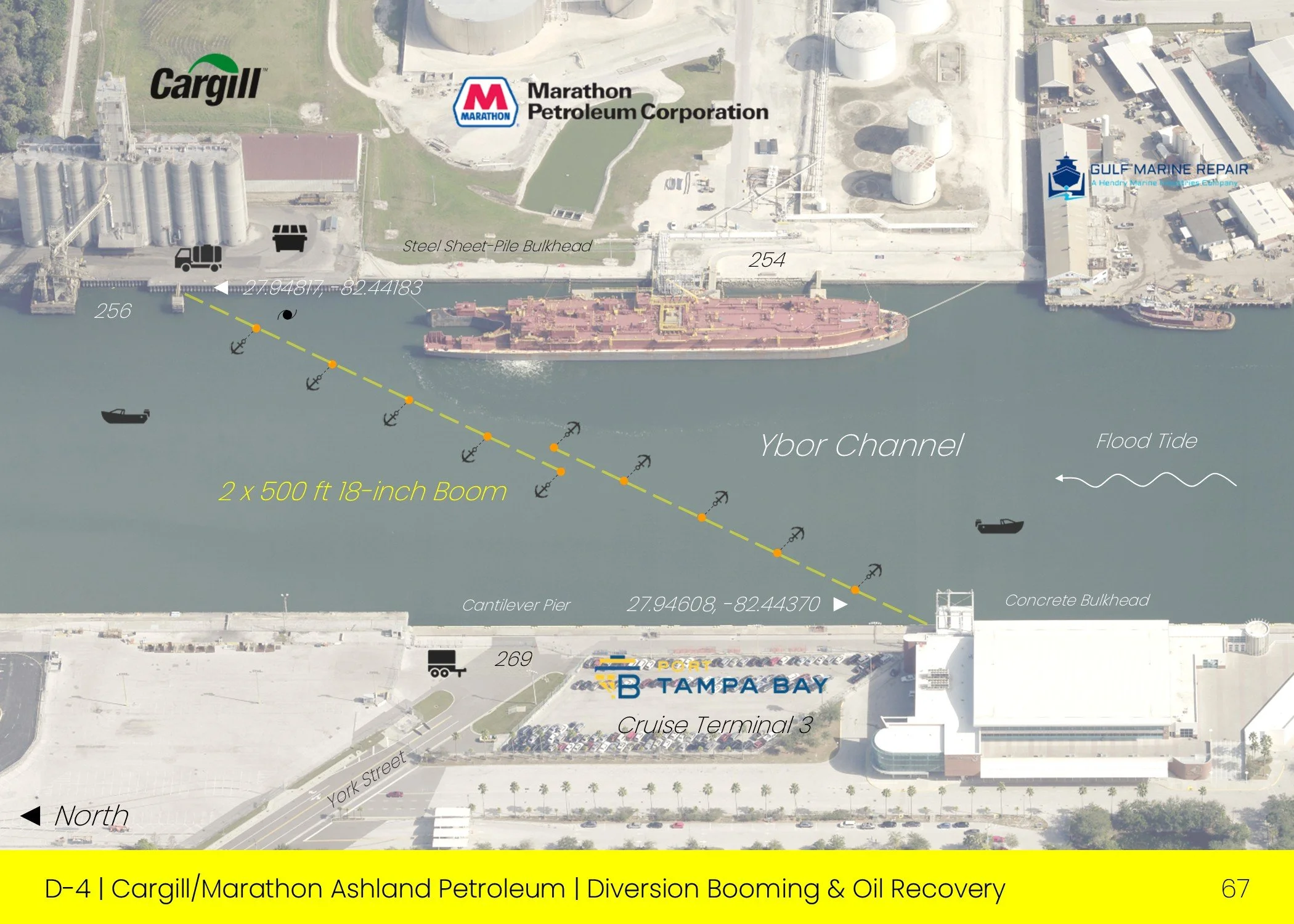
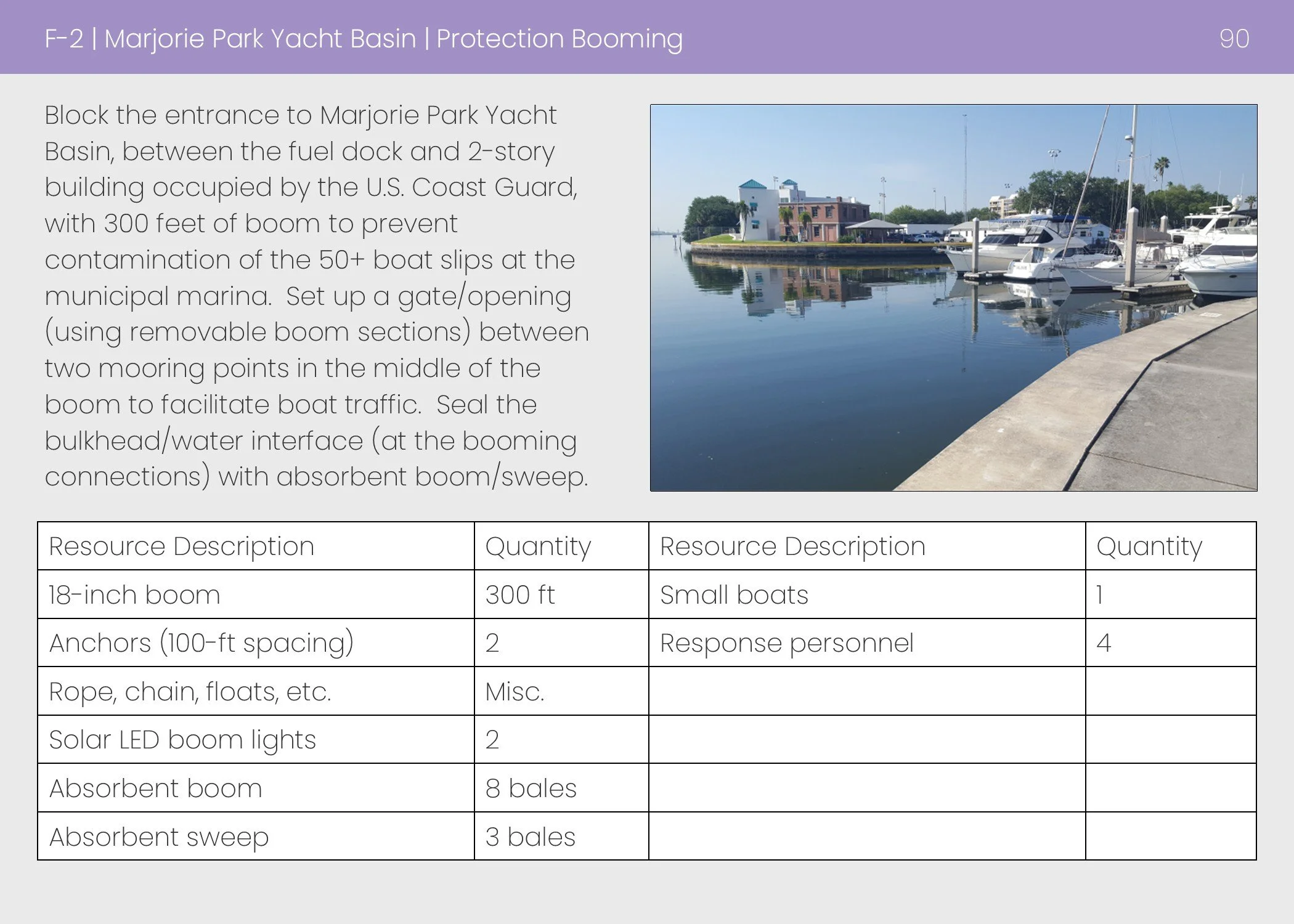
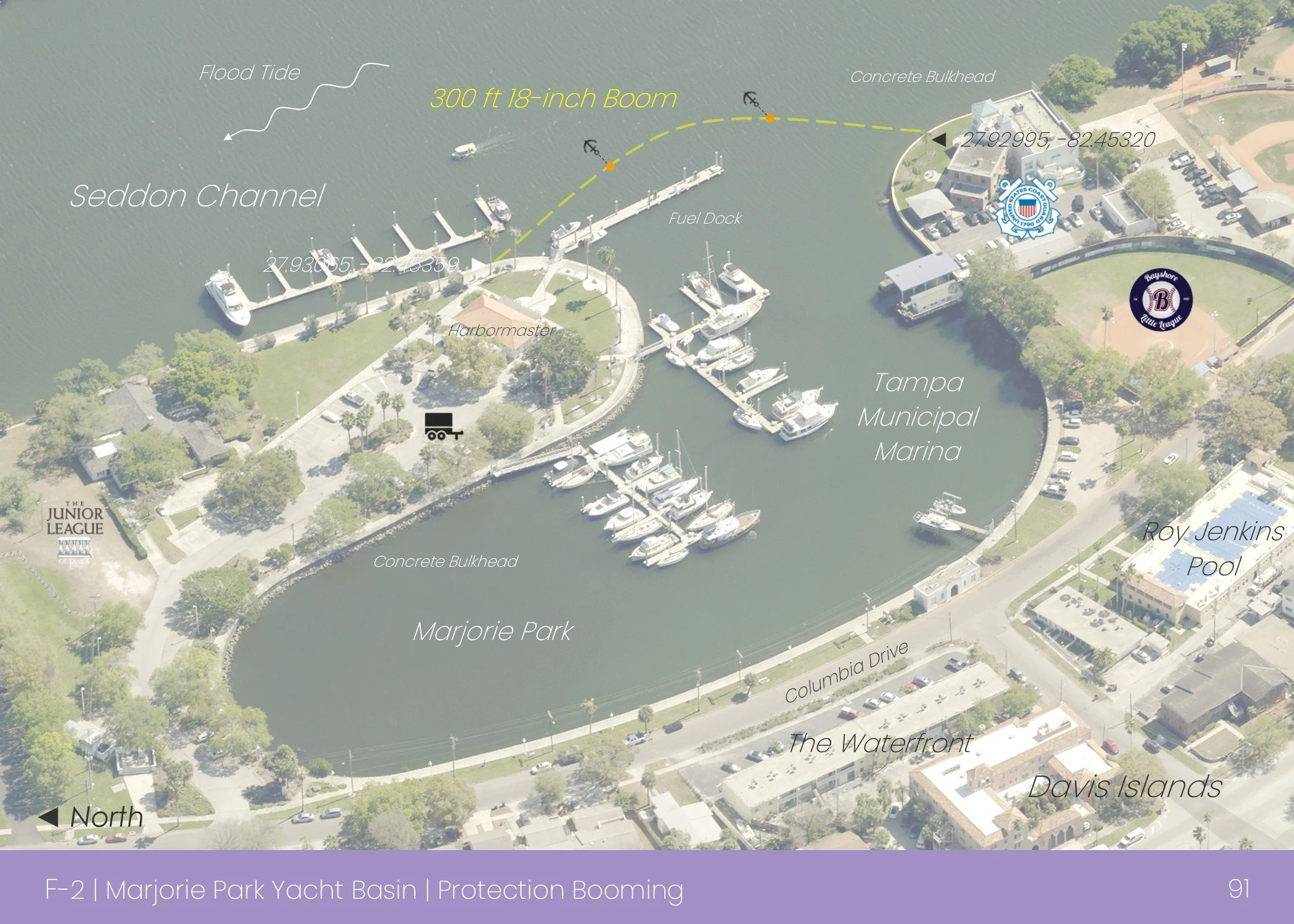
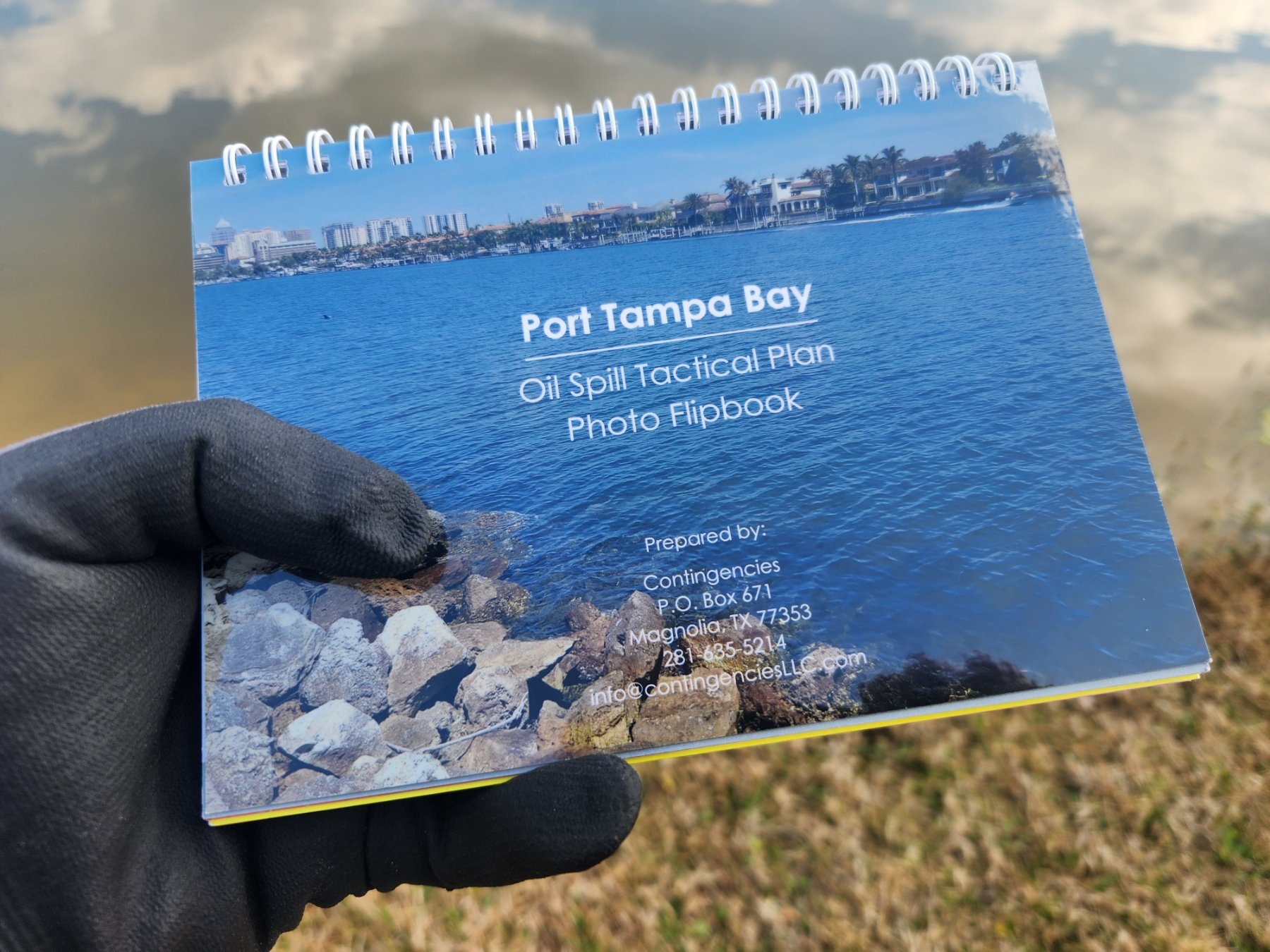
Contingencies’ oil spill tactical plans offer guidance in a distinctly unique format, combining high-resolution aerial imagery with easy-to-interpret deployment instructions. Think of them as “mini” Geographic Response Plans (GRPs), albeit with strategies unique to your operations and environmental setting.
Field-Ready
Rigorous design features water-resistant pages, finished with wire-O binding.
Practical, Simple, Straightforward
Layout promotes quick and effective decision-making, using illustrations as the primary means to communicate work instructions.
”Painting the Picture”
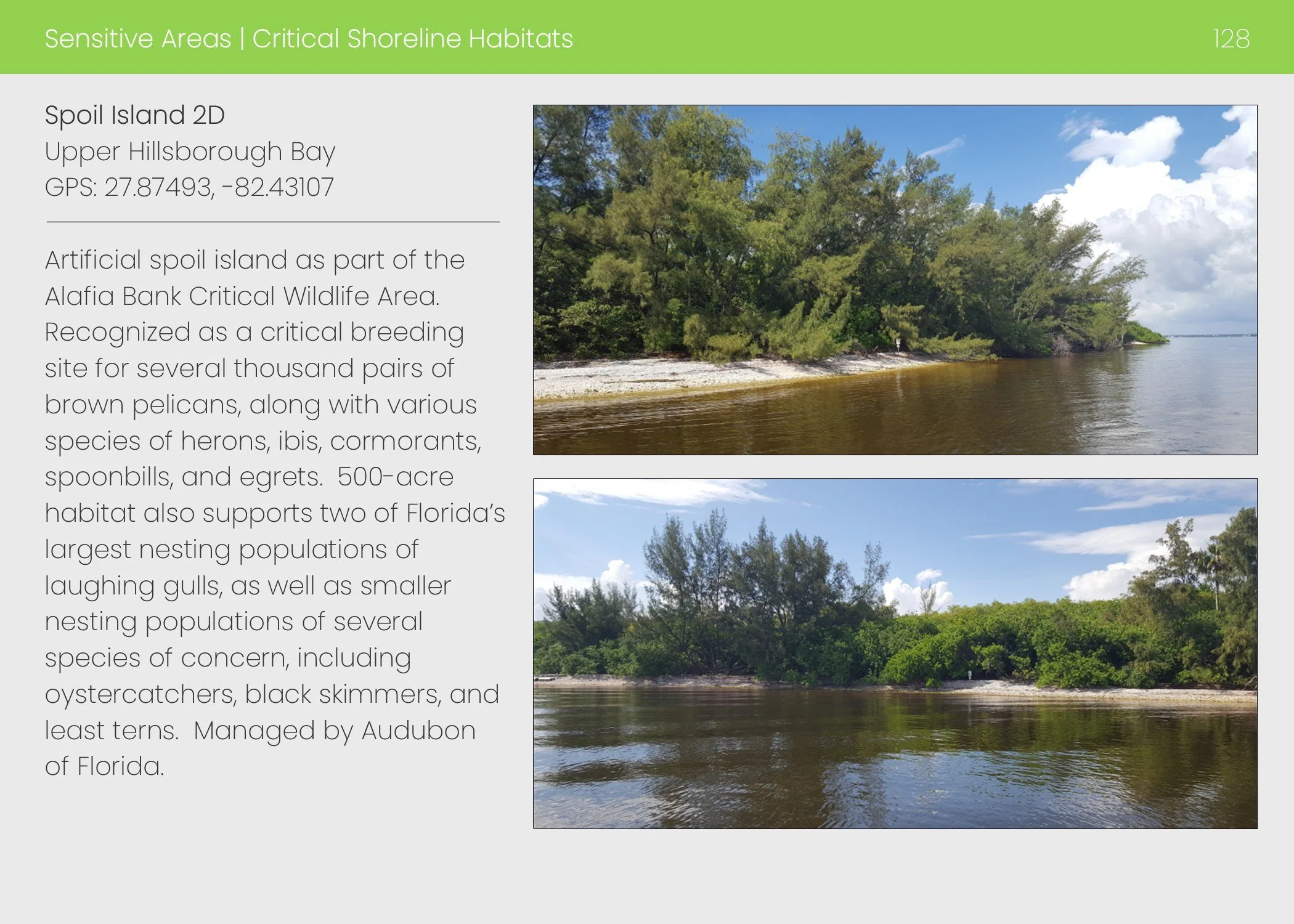
Aerial/oblique photographs serve as the “canvas”. Symbols and text are neatly incorporated on top of the imagery to explain the deployment strategy, depicting such items and features as:
• Boom configurations.
• Anchoring mechanisms.
• Skimmer positioning.
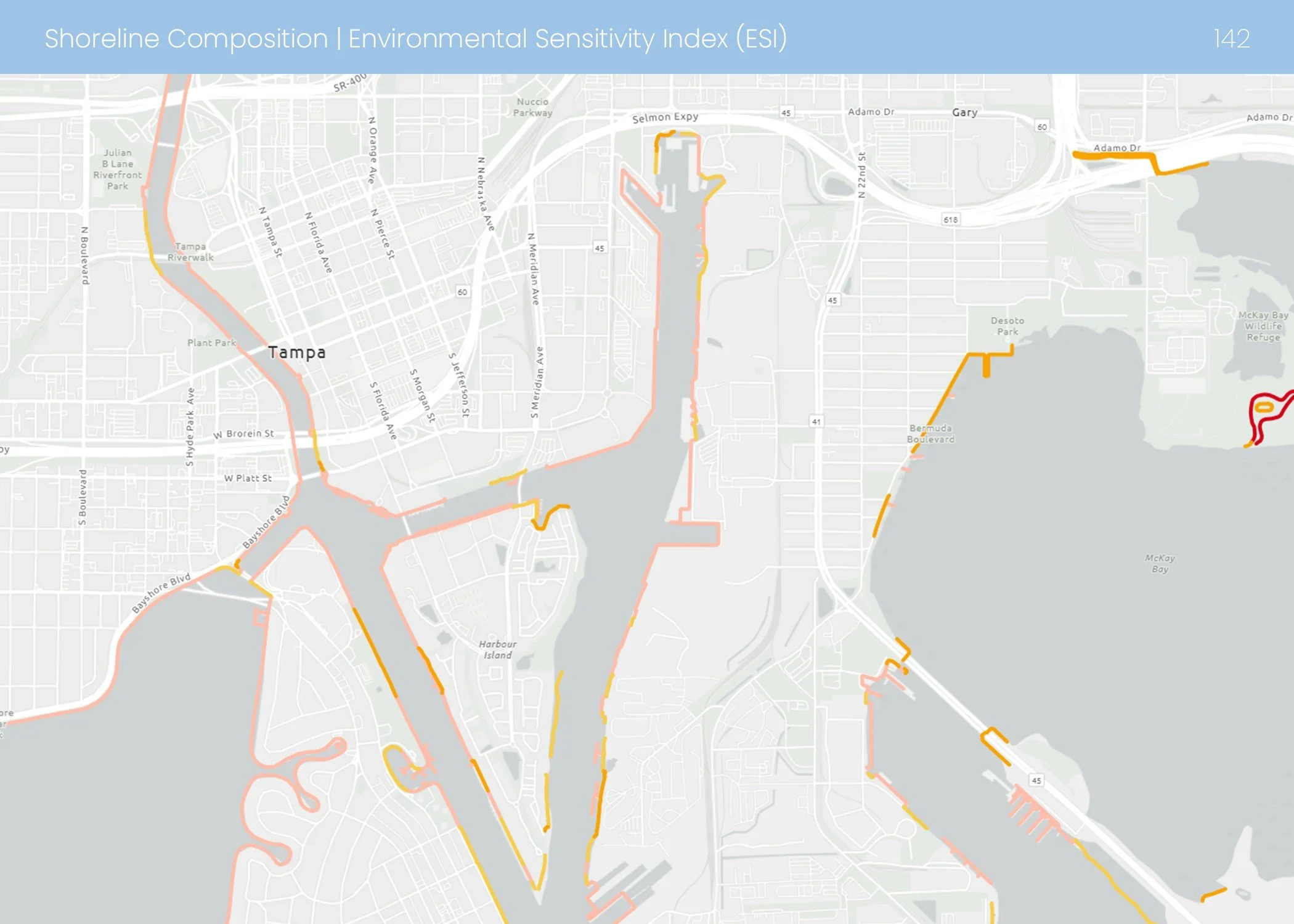
• Shoreline/terrain composition.
• Tidal current/streamflow patterns.
• Property ownership.
• Physical site hazards.
• Public exposures.
• Indigenous flora/fauna.
• Prominent landmarks.
• Access routes.
• GPS coordinates.
(not too) Technical Writing
Strategies and tactics are generally stated in the form of a command, beginning with an action verb, allowing response personnel to have a clearer understanding of their specific work assignments.
Simple Spreadsheet of Recommended Resources
Identifying the proper equipment, supplies, and personnel to successfully accomplish each task.
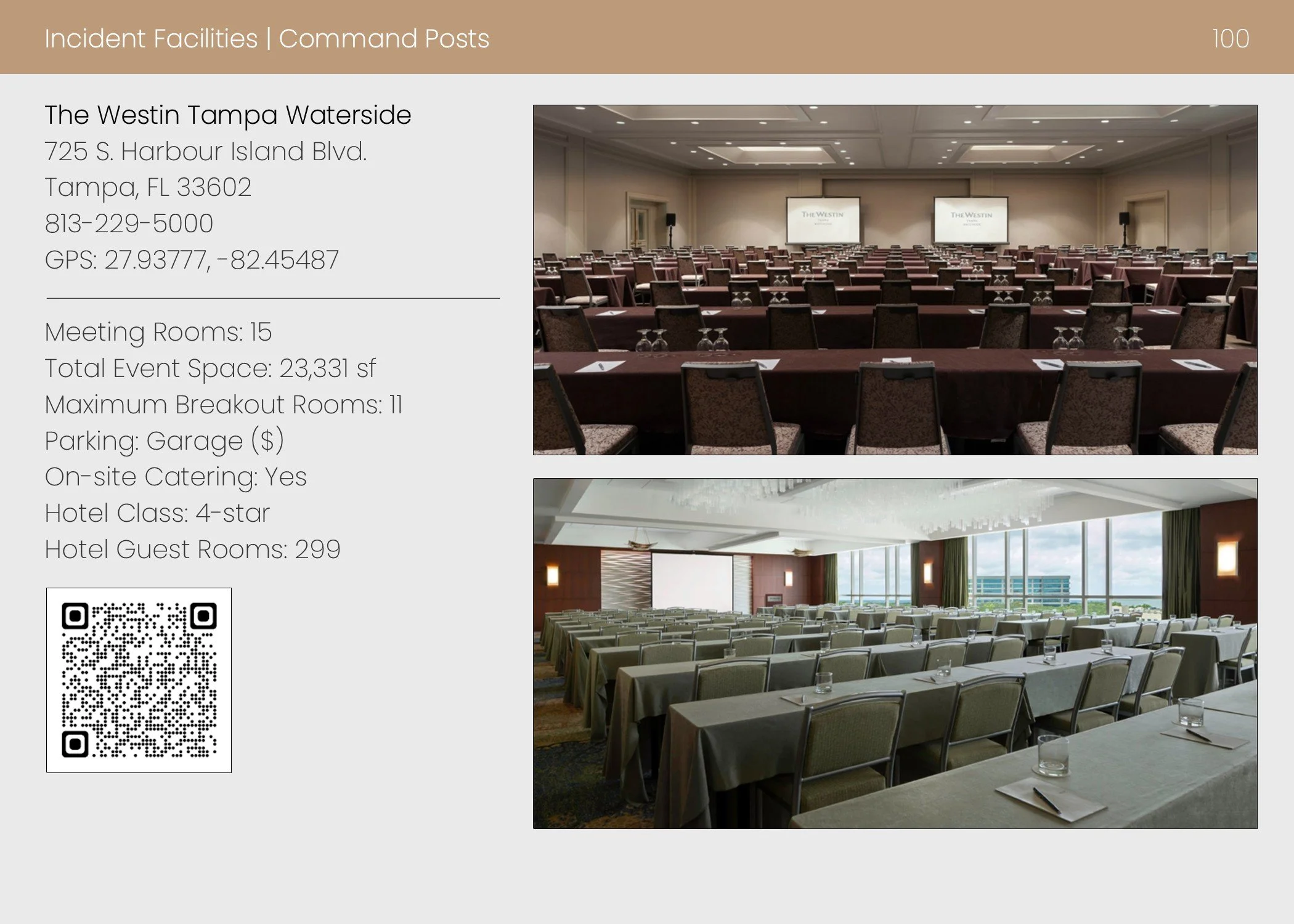
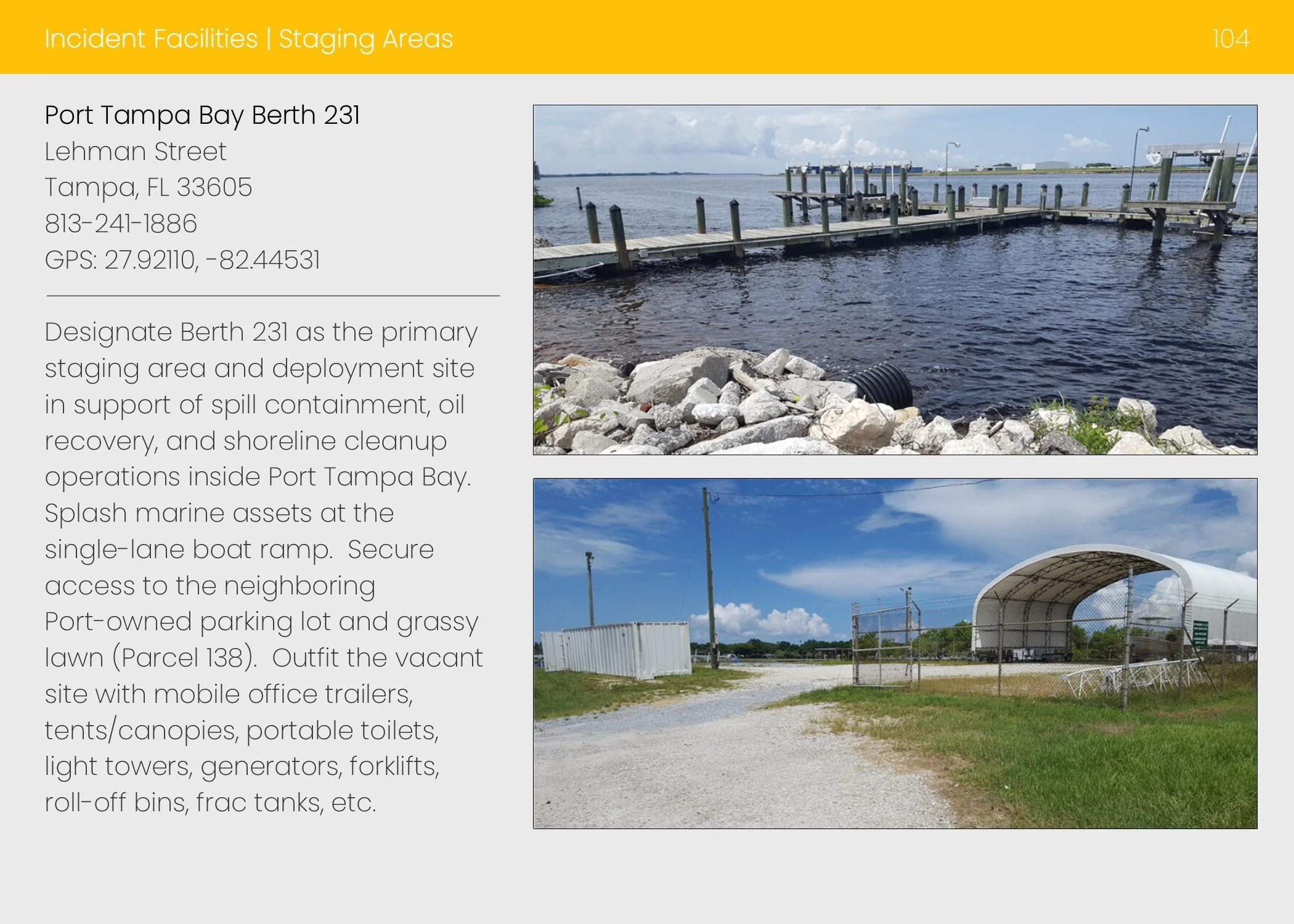
Incident Facilities
Location recommendations for command posts, staging areas, temporary waste storage areas, equipment/vessel decontamination stations, etc.
Resources at Risk
In-depth characterizations of sensitive receptors which could be negatively affected by a spill.
QR Code Links
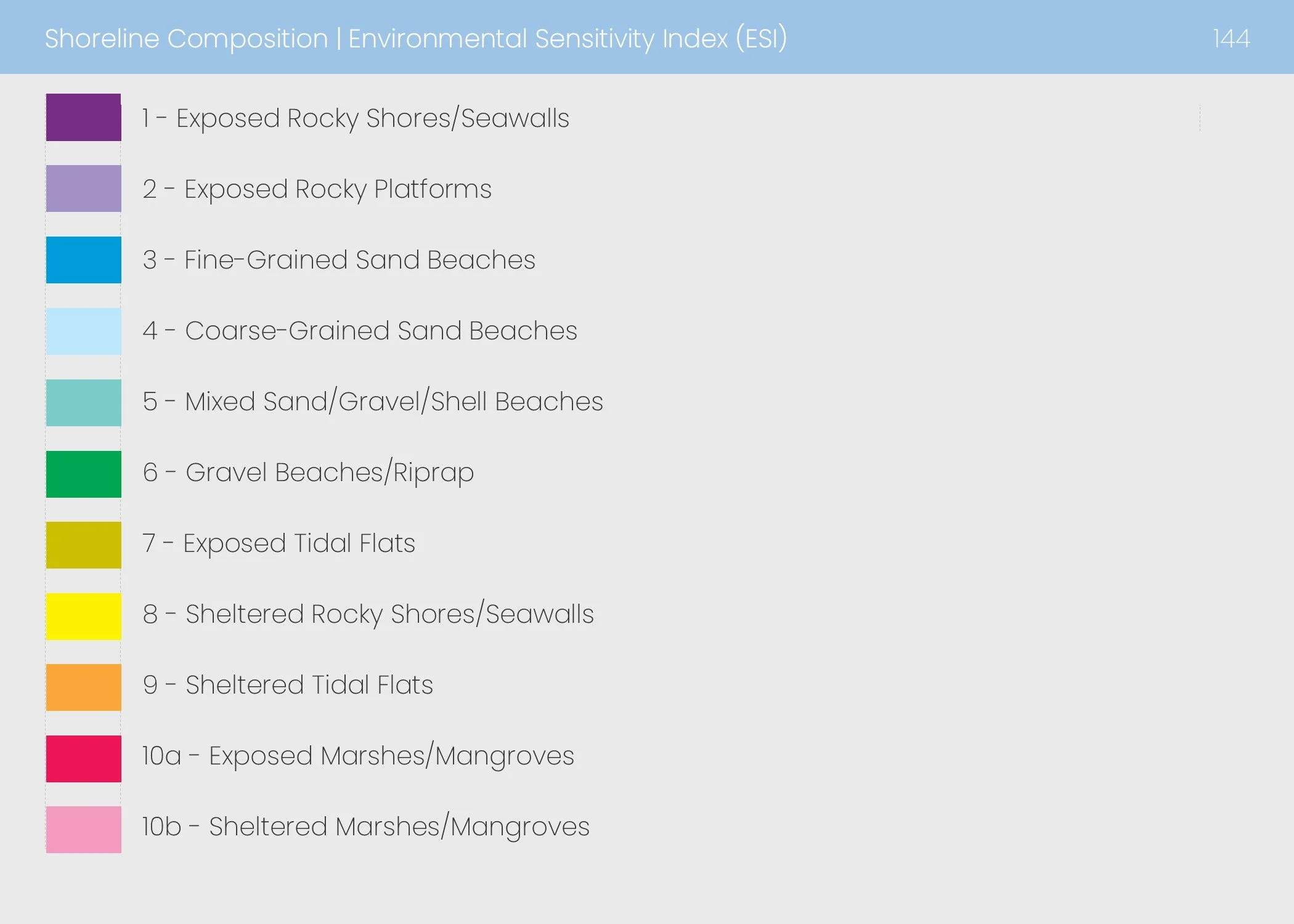
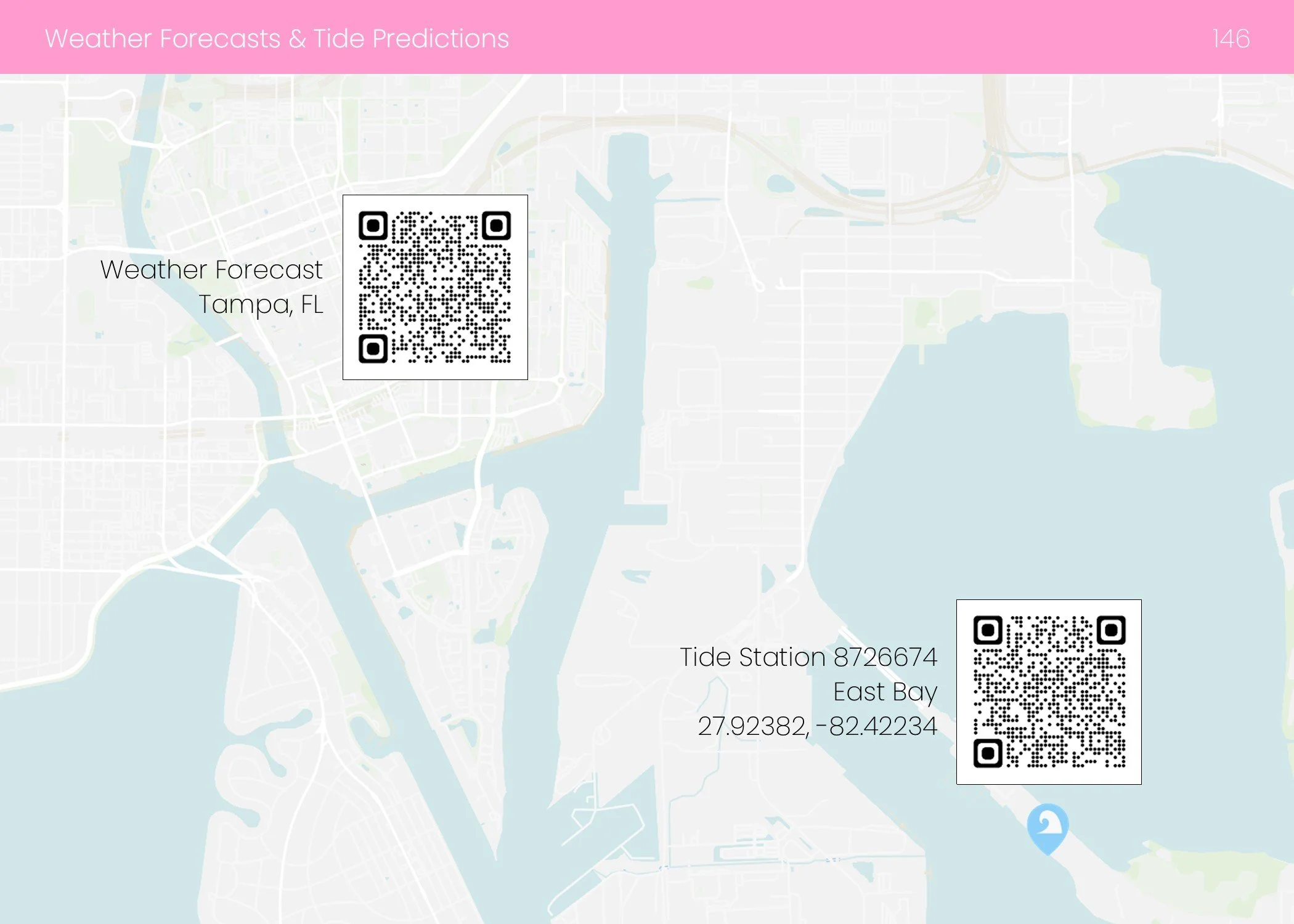
Providing quick access to weather forecasts, tide predictions, river gauges, ESI maps, ACPs, GRPs.
Site Reconnaissance
Field surveys are conducted by industry professionals with years of experience. We also solicit input from OSRO representatives, natural resources trustees, and others who are intimately familiar with the receiving environment.
Pick a Size
Custom sizes (as small as 5-inch x 7-inch or as large as 8-inch x 11.5-inch) allow for convenient storage in a vehicle’s glove compartment, boat’s storage console, dock house, equipment trailer, spill kit, backpack, etc.
Example Pages
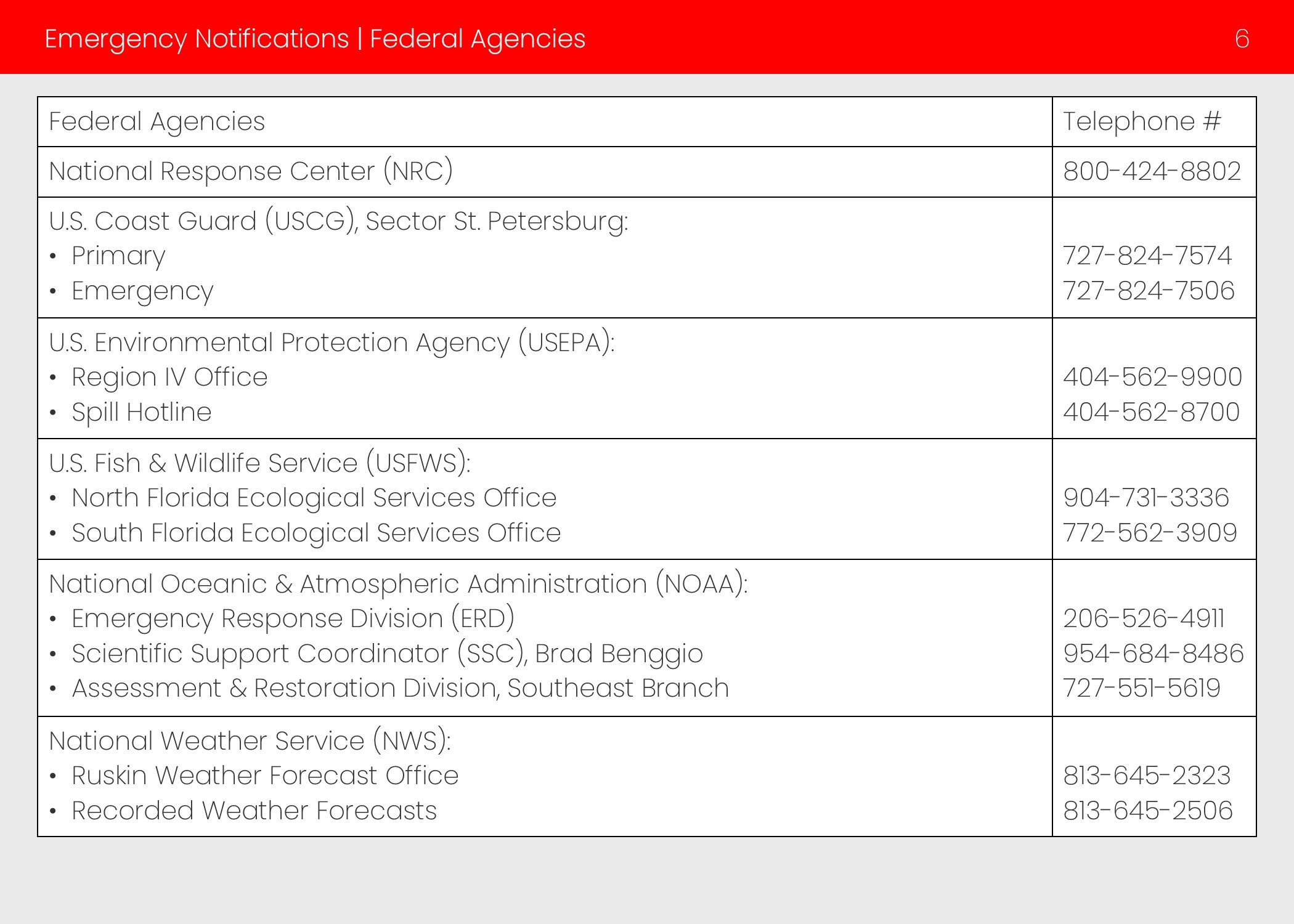
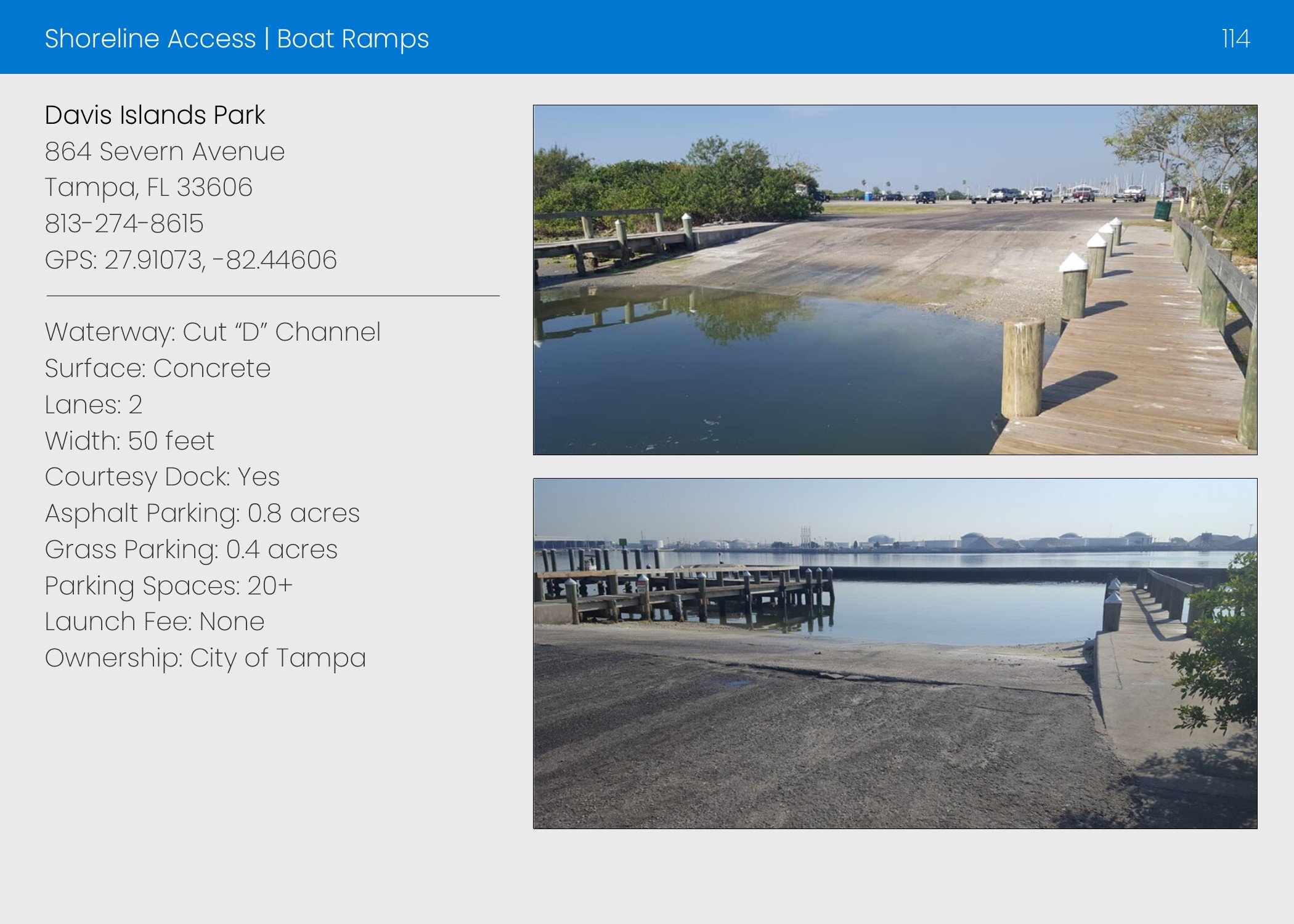
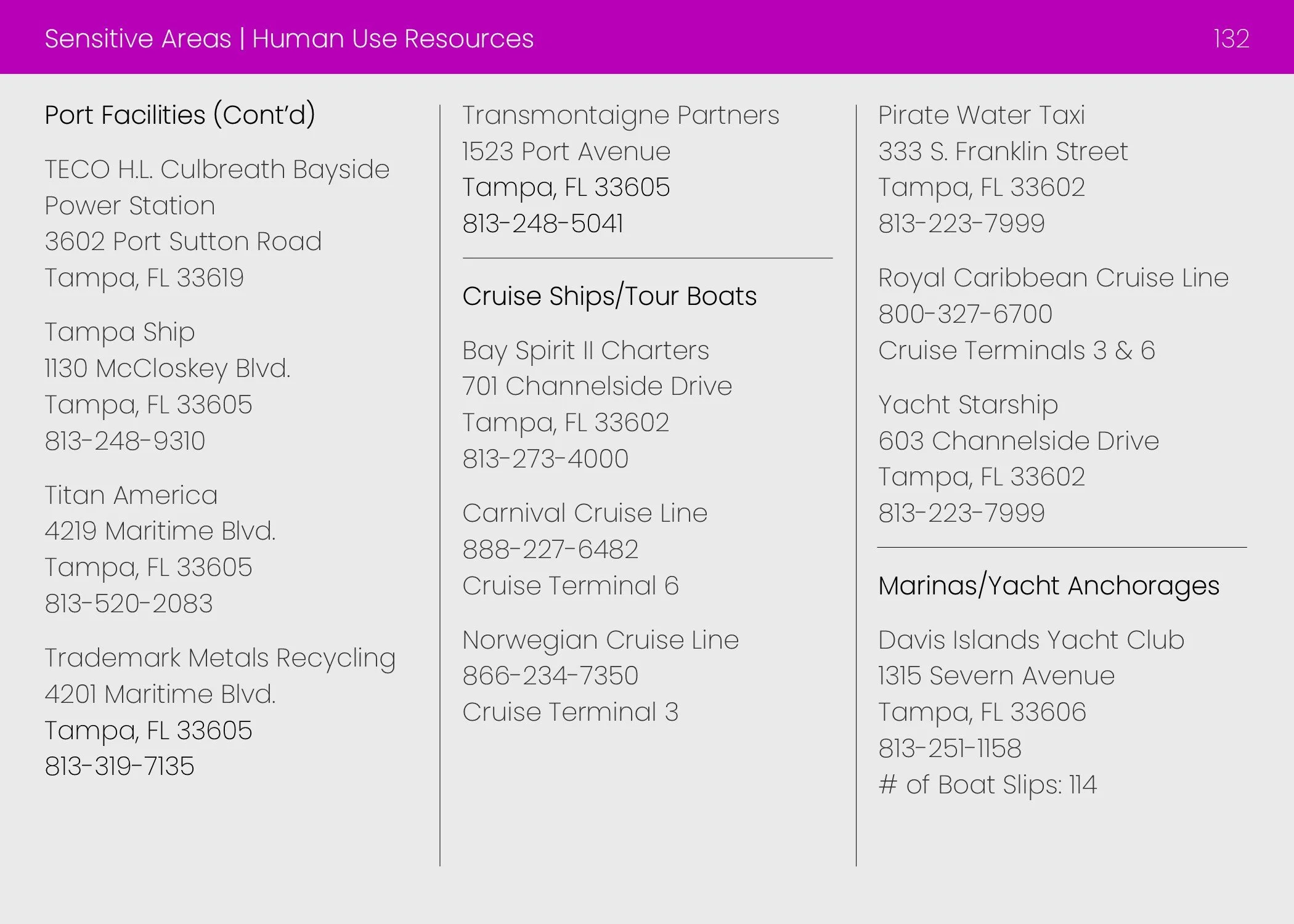
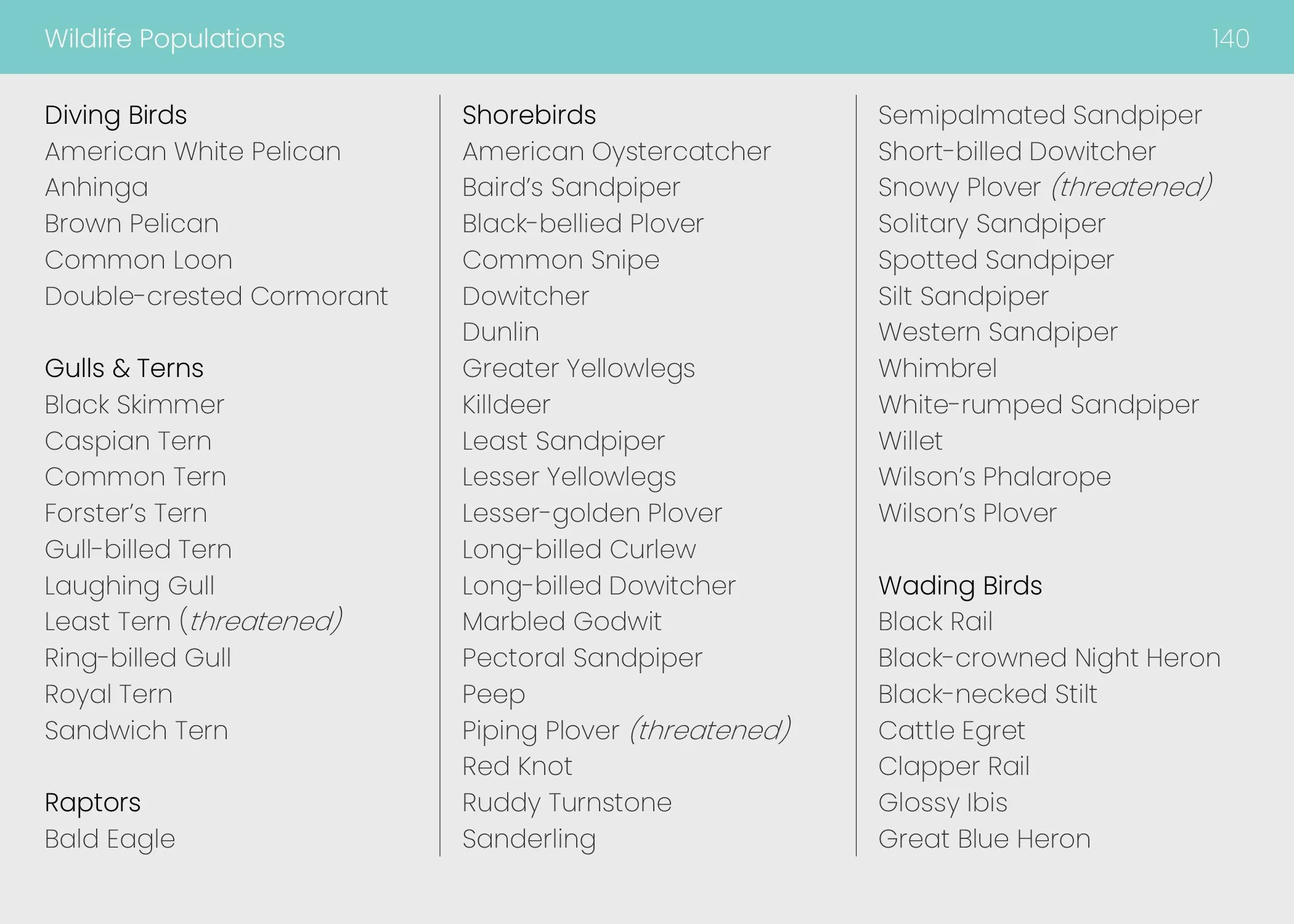
We’ve included a few page excerpts from a project in Tampa, Florida.
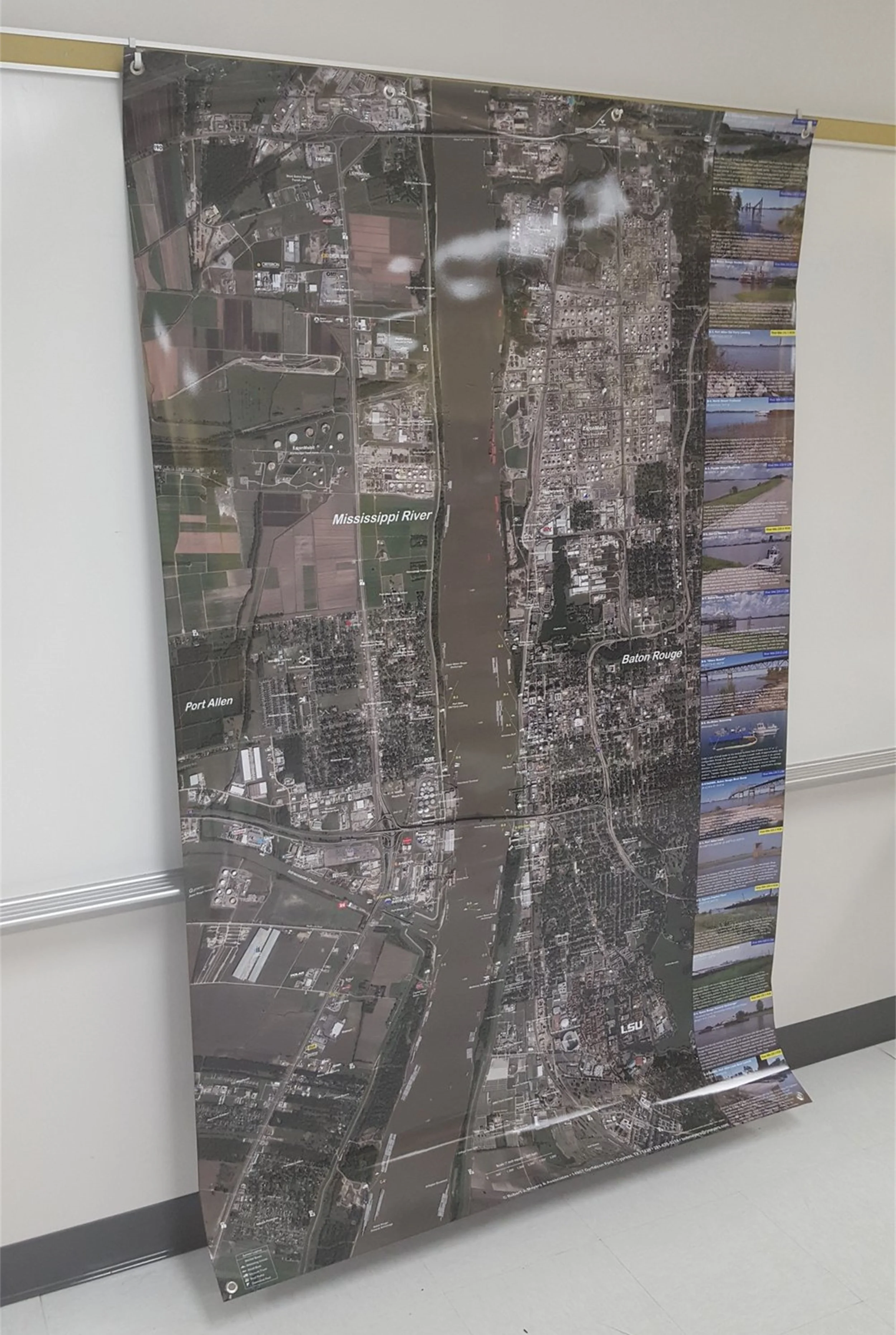
Your oil spill tactical plan doesn’t necessarily have to be in a 3-ring binder. Instead, envision your plan in the form of a vibrant poster display, at the center of strategic discussions as a pollution response unfolds.
Dynamic Situation Map
Integral component of the Situation Display, effectively serving as the Common Operating Picture (COP) prior to the arrival of GIS technology.
”Eye-Catching” Graphics
Printed on a vinyl-type banner, then finished with glossy lamination, allowing notations to be made with a dry/wet-erase marker. Or the graphics can be mounted on a rigid, custom-cut, 3/16-inch foam board for superior durability.
High-Resolution, Aerial Imagery
From either a vertical or panorama perspective.
Work Assignments
Cleverly incorporated onto the posters, with a site photograph and brief narrative describing each proposed strategy.
Sensitive Area Identification
Posters offer a birds-eye view of sensitive areas that could be impacted by an oil spill incident. Recommended protection measures are also featured on the maps.
Write-on/Wipe-off
Make notations with a dry/wet-erase marker:
• Plot spill trajectories.
• Illustrate shoreline impacts.
• Track deployed resources.
• Outline Division boundaries.
• Demarcate hot/warm/cold zones.
• Note incident facilities.
• Depict wildlife impacts.
Custom Sizes
Up to 5-feet high x 10-feet wide, optimized for use in a conference room setting, e.g., Incident Command Post (ICP). Miniature versions (24-inch x 36-inch) can also be designed for field applications, spread out atop the hood of a pickup truck or rigged to the side of a boom/equipment trailer.
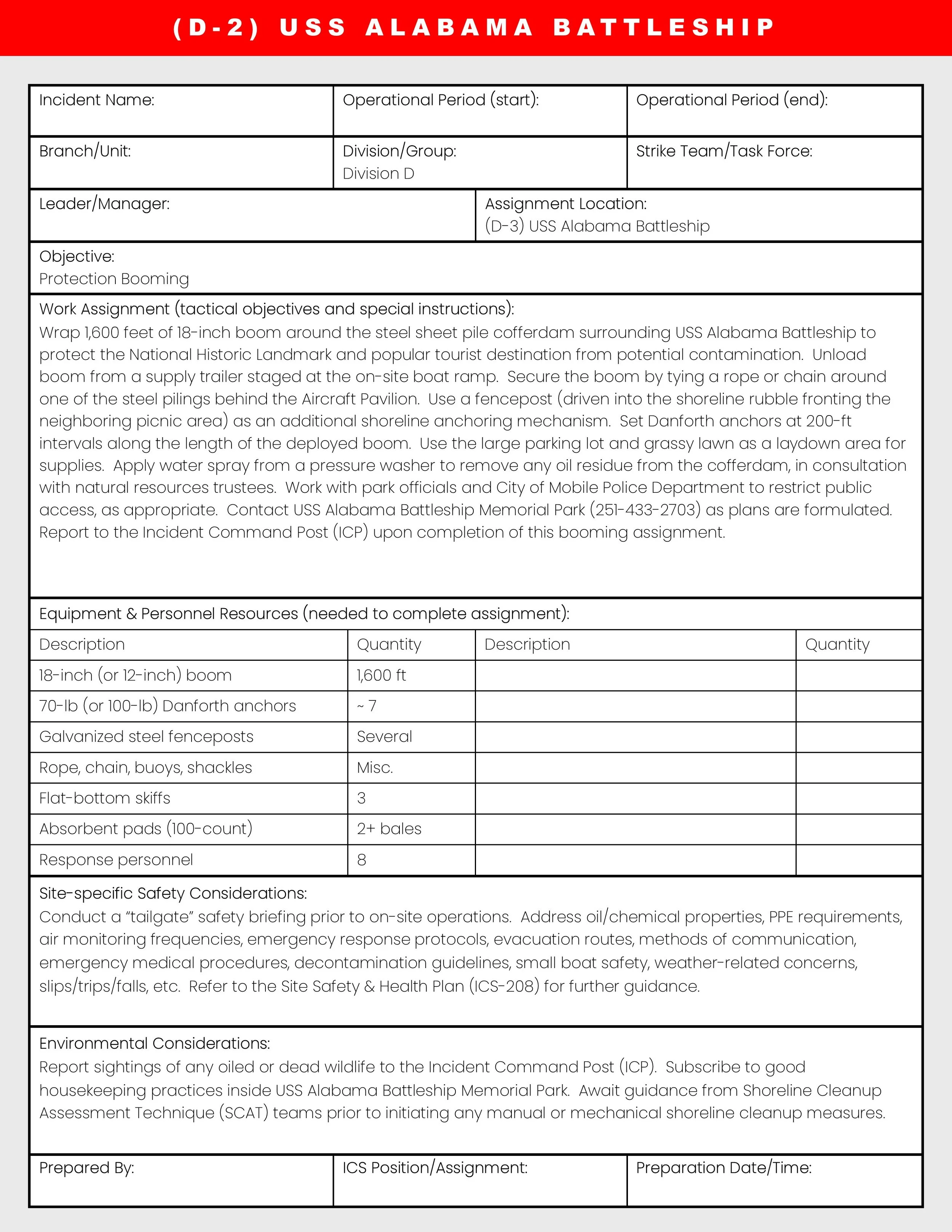
Assignment Lists (ICS-204) may be the most recognizable and standardized method to communicate work assignments to field personnel. It only makes sense to incorporate your oil spill tactical plan into this widely accepted format.
Bi-Fold, Brochure-Type Format
Digitally printed on 80-lb card stock (front-and-back), folded down the middle, with overall dimensions of 8.5-inch x 17-inch.
Grab & Go
May be conveniently stored in a file box, 3-ring binder, go-kit, canvas saddle bag, or desktop acrylic file sorter, ready for immediate use in an emergency.
Pre-Completed ICS-204
Cover page features the all-important Assignment List (ICS-204), pre-loaded with clear-cut work instructions, resource needs, and site-specific safety and environmental concerns. All you need to do is fill in a few blanks - Incident Name, Operational Period, Division/Group ID, and Supervisor Name.
Behold the Centerfold
Folder opens to an impressive, oversized aerial photograph, depicting the site layout and boom arrangement.
Overview Map + Site Photographs
Back cover includes a convenient street map (with QR code for driving directions) and representative photographs of the worksite.
Example Worksheet
The side panels features worksheets for boom deployment sites on the Mississippi River (south of Baton Rouge) and Mobile Bay.
We fully understand plan maintenance can be a chore (and a bit of a bore). Let us help you remain in compliance, whether it’s preparation of a brand new plan from scratch, agency resubmittal of your existing plan, or assistance with minor (or major) edits following an annual review or regulatory audit.
Facility Response Plans (FRP)
Marine Transportation-Related Facilities (33 CFR 154),
Non-Transportation-Related Onshore Facilities (40 CFR 112),
Onshore Oil Pipelines (49 CFR 194)
Vessel Response Plans (VRP)
33 CFR 155.1030
Nontank Vessel Response Plans (NTVRP)
33 CFR 155.5030
Operations Manuals
33 CFR 154.310
Facility Security Plans (FSP)
33 CFR 105.405
Contingencies
20122 Sienna Ridge Lane
Magnolia, TX 77355
281-635-5214
info@contingenciesLLC.com
© 2026, Contingencies, L.L.C.